Quantum Error Correction and the Floquet Codes
Julien Bréhier
University of Bonn 20.05.2025
Journey Through Quantum Error Correction
- Introduction
- The Toric Code
- The Toric Honeycomb Floquet Code (THFC)
- Cutting Slices
- Transversal Operators
- Lattice Surgery (LS)
- Prospects
Important notions
-
Stabilizer codes
-
Distance of a code
-
'Good codes'
-
Logical operators
-
Minimum Weight Perfect Matching
-
Ancilla measurements
-
Error Correcting
-
Fault tolerance
-
Transversal operators
-
Lattice Surgery
Stabilizer codes
Stabilizer codes
\text {For a stabilizer code }\llbracket n,k,d \rrbracket
Stabilizer codes
\text {For a stabilizer code }\llbracket n,k,d \rrbracket
\set{\forall s_i,s_j \in \mathcal{S} \subsetneq\mathcal{P}^n,[s_i,s_j]=0}
Stabilizer codes
\text {For a stabilizer code }\llbracket n,k,d \rrbracket
\forall s \in \mathcal{S},s\bar{\ket{\psi}} = {\color{red}+} \bar{\ket{\psi}}
\set{\forall s_i,s_j \in \mathcal{S} \subsetneq\mathcal{P}^n,[s_i,s_j]=0}
Stabilizer codes
\text {For a stabilizer code }\llbracket n,k,d \rrbracket
\forall s \in \mathcal{S},s\bar{\ket{\psi}} = {\color{red}+} \bar{\ket{\psi}}
k = n-rank(\mathcal{S})
\set{\forall s_i,s_j \in \mathcal{S} \subsetneq\mathcal{P}^n,[s_i,s_j]=0}
The 3-Qubit Code
The 3-Qubit Code
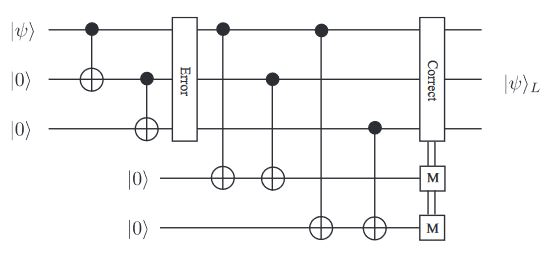
https://arxiv.org/pdf/0905.2794
The 3-Qubit Code
https://arxiv.org/pdf/0905.2794
s = \langle Z_1Z_2,Z_1Z_3\rangle
The 3-Qubit Code
https://arxiv.org/pdf/0905.2794
s = \langle Z_1Z_2,Z_1Z_3\rangle
|\bar{0}\rangle = |000\rangle \\
|\bar{1}\rangle = |111\rangle
The Steane Code
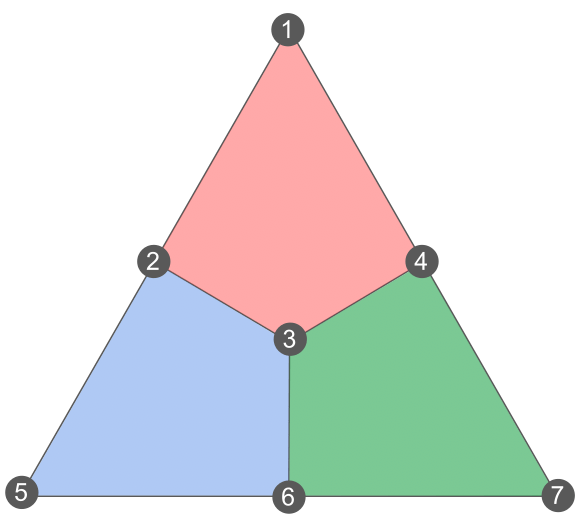
https://arthurpesah.me/blog/2023-03-16-stabilizer-formalism-2/
The Steane Code
\begin{align*}
& IIIXXXX \\
& IXXIIXX \\
& XIXIXIX \\
& IIIZZZZ \\
& IZZIIZZ \\
& ZIZIZIZ
\end{align*}
https://arthurpesah.me/blog/2023-03-16-stabilizer-formalism-2/
The Steane Code
\begin{align*}
\bar{X} & = XXXXXXX \\
\bar{Z} & = ZZZZZZZ.
\end{align*}
https://arthurpesah.me/blog/2023-03-16-stabilizer-formalism-2/
The Search for Good Codes
The Search for Good Codes
You might remember :
The Search for Good Codes
` \text {For a stabilizer code }\llbracket n,k,d \rrbracket ,
You might remember :
Journey Through Quantum Error Correction
- Introduction
- The Toric Code
- The Toric Honeycomb Floquet Code (THFC)
- Cutting Slices
- Transversal Operators
- Lattice Surgery (LS)
- Prospects
Hamiltonian
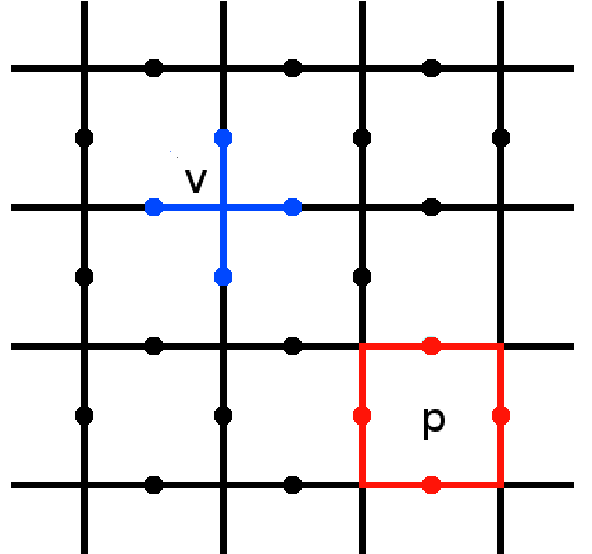
A_v = \prod_{i \in v} \sigma^x_i, \,\,\\ B_p = \prod_{i \in p} \sigma^z_i
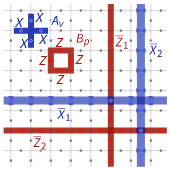
Logical Operators
https://errorcorrectionzoo.org/c/toric
Minimum Weight Perfect Matching
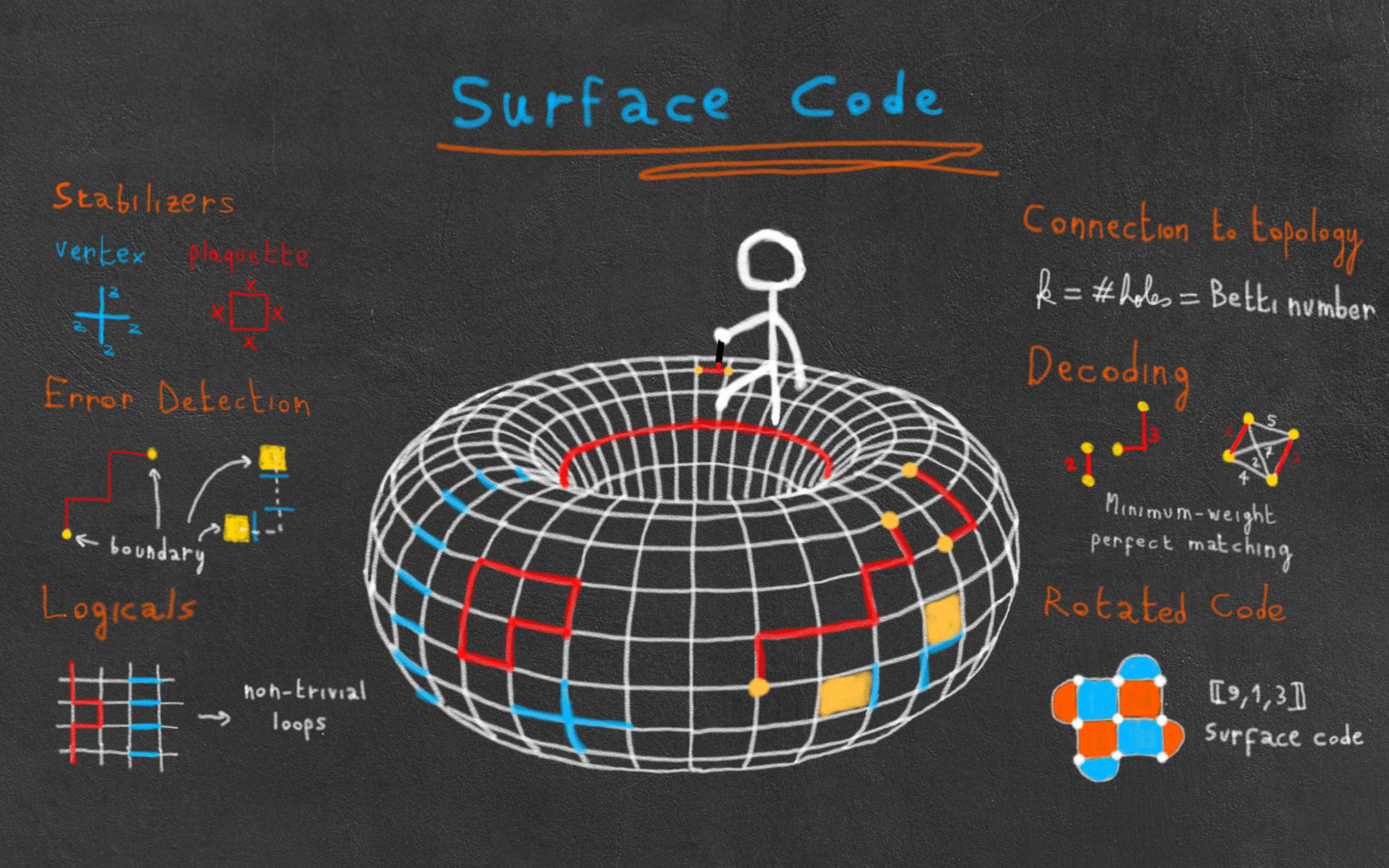
https://arthurpesah.me/blog/2023-05-13-surface-code/
Journey Through Quantum Error Correction
- Introduction
- The Toric Code
- The Toric Honeycomb Floquet Code (THFC)
- Cutting Slices
- Transversal Operators
- Lattice Surgery (LS)
- Prospects
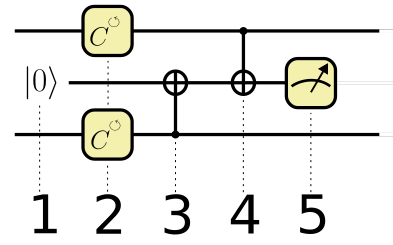
Measurement Method Through Ancilla
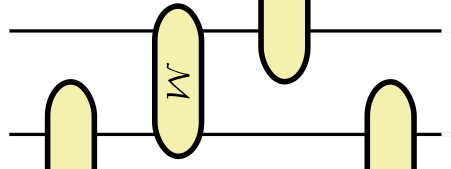
Other Measurements
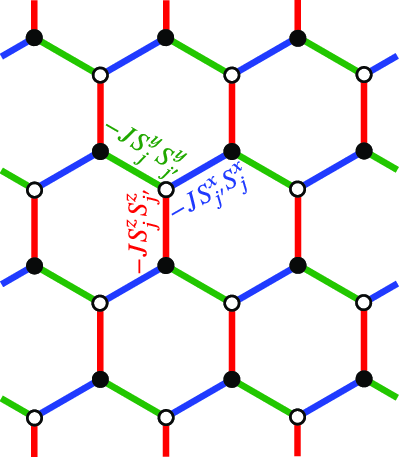
Kitaev Spin Model
THC Yields No Qubit
e = 3p
q = 2p
s = (p - 1) + 2 = p + 1
|\mathcal{G}| = 3p - 1
g = \frac{|\mathcal{G}| - |\mathcal{S}|}{2} = \frac{3p - 1 - (p + 1)}{2} = p - 1
k + g + s = n \quad \Longleftrightarrow \quad k + (p - 1) + (p + 1) = 2p
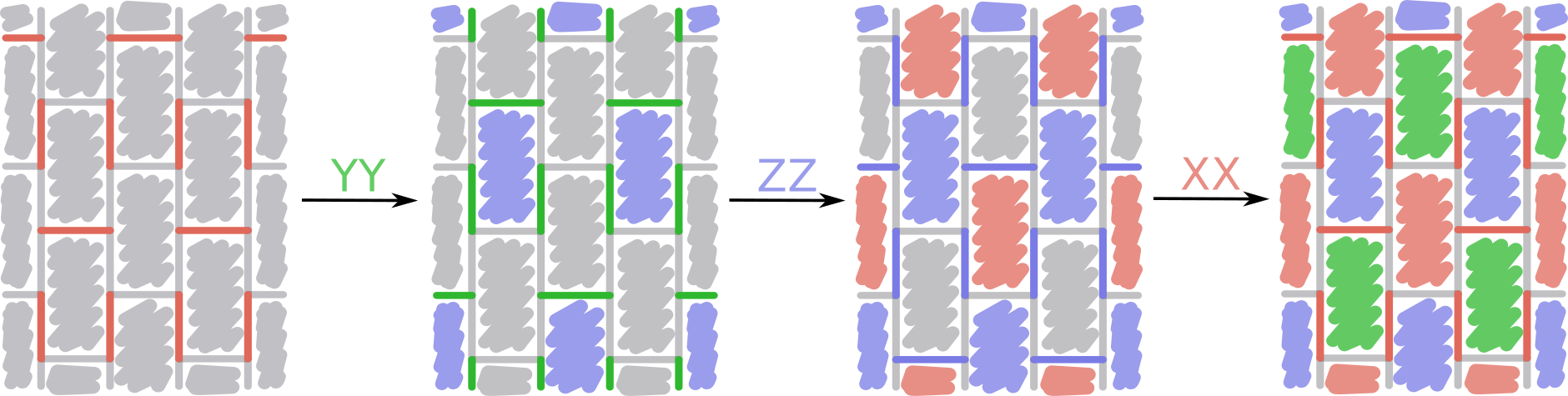
Floquet-ness
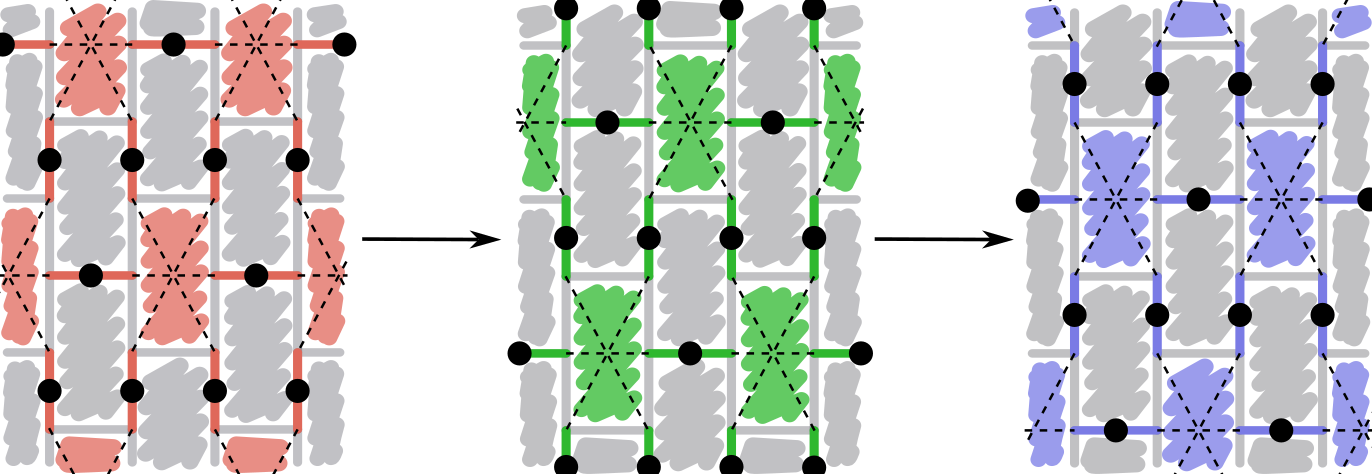
Toric Code ?
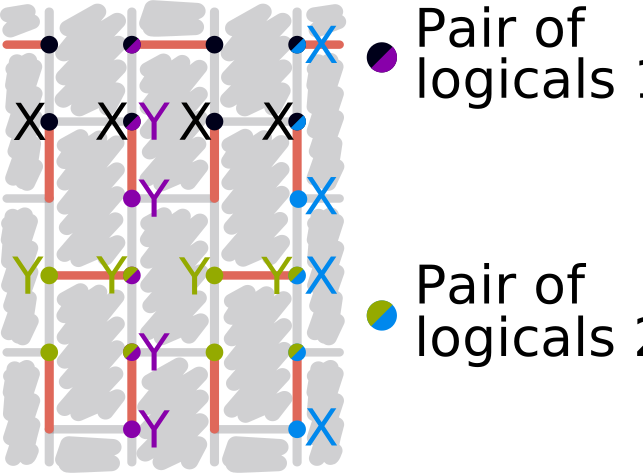
Two Protected Operators
Journey Through Quantum Error Correction
- Introduction
- The Toric Code
- The Toric Honeycomb Floquet Code (THFC)
- Cutting Slices
- Transversal Operators
- Lattice Surgery (LS)
- Prospects
Setting boundaries
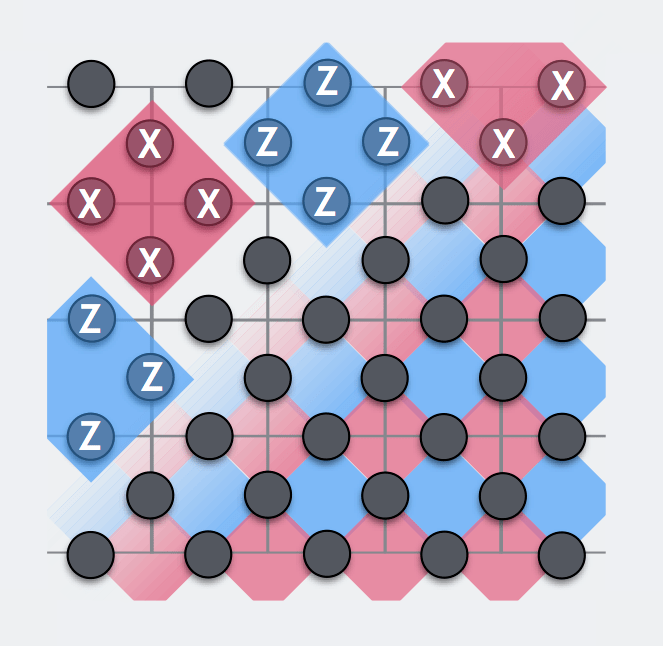
https://quantumcomputing.stackexchange.com/questions/4395/how-is-computation-done-in-a-2d-surface-code-array
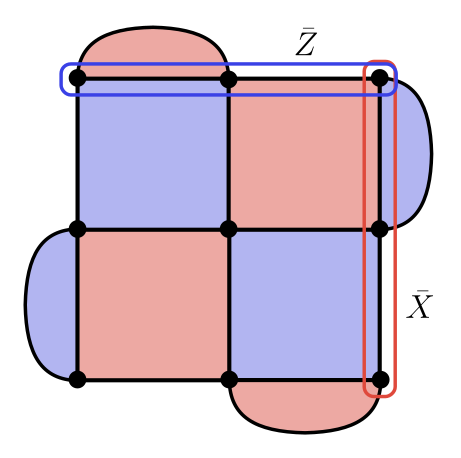
The Surface Code
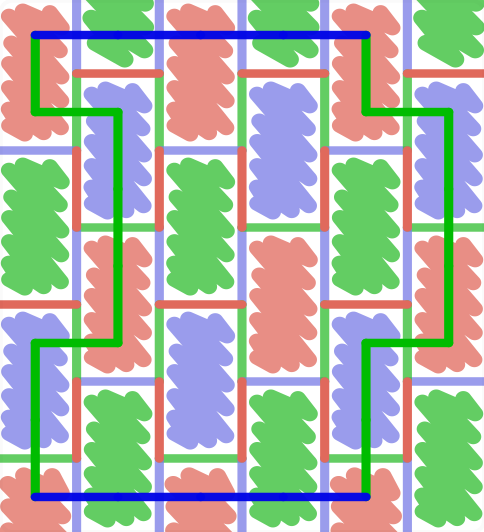
The Planar Honeycomb Floquet Code (PHFC)
Careful with the edges
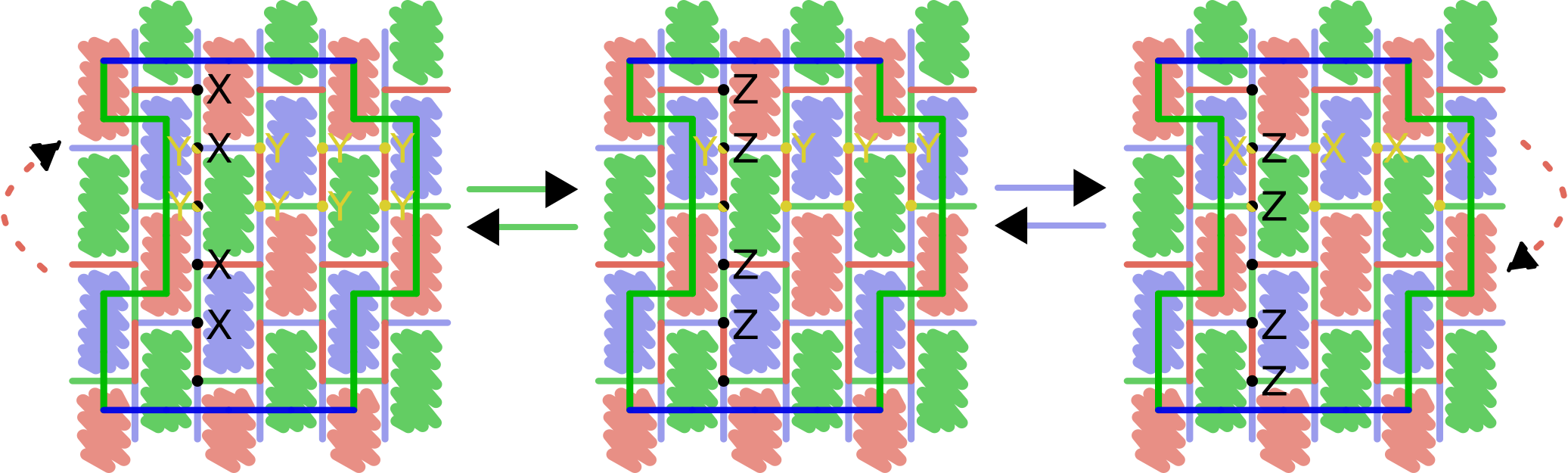
X_a
Y_a
Y_b
Z_a
Z_b
X_b
Notion of threshold
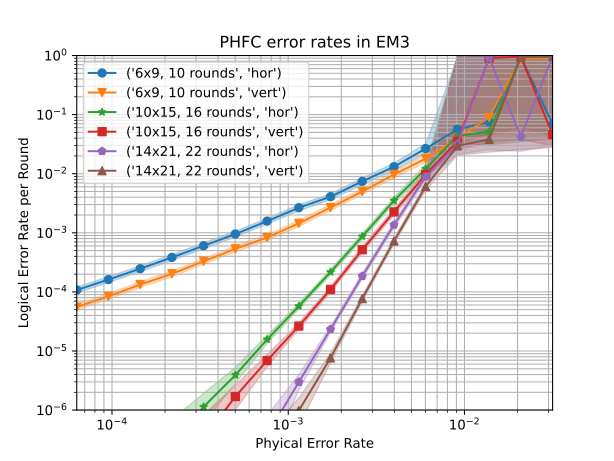
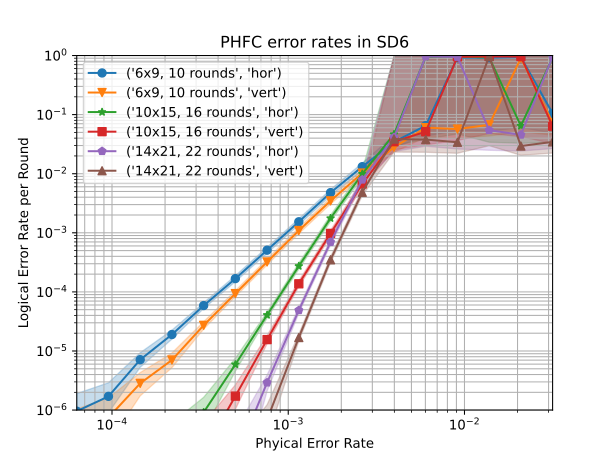
Journey Through Quantum Error Correction
- Introduction
- The Toric Code
- The Toric Honeycomb Floquet Code (THFC)
- Cutting Slices
- Transversal Operators
- Lattice Surgery (LS)
- Prospects
What is it ?

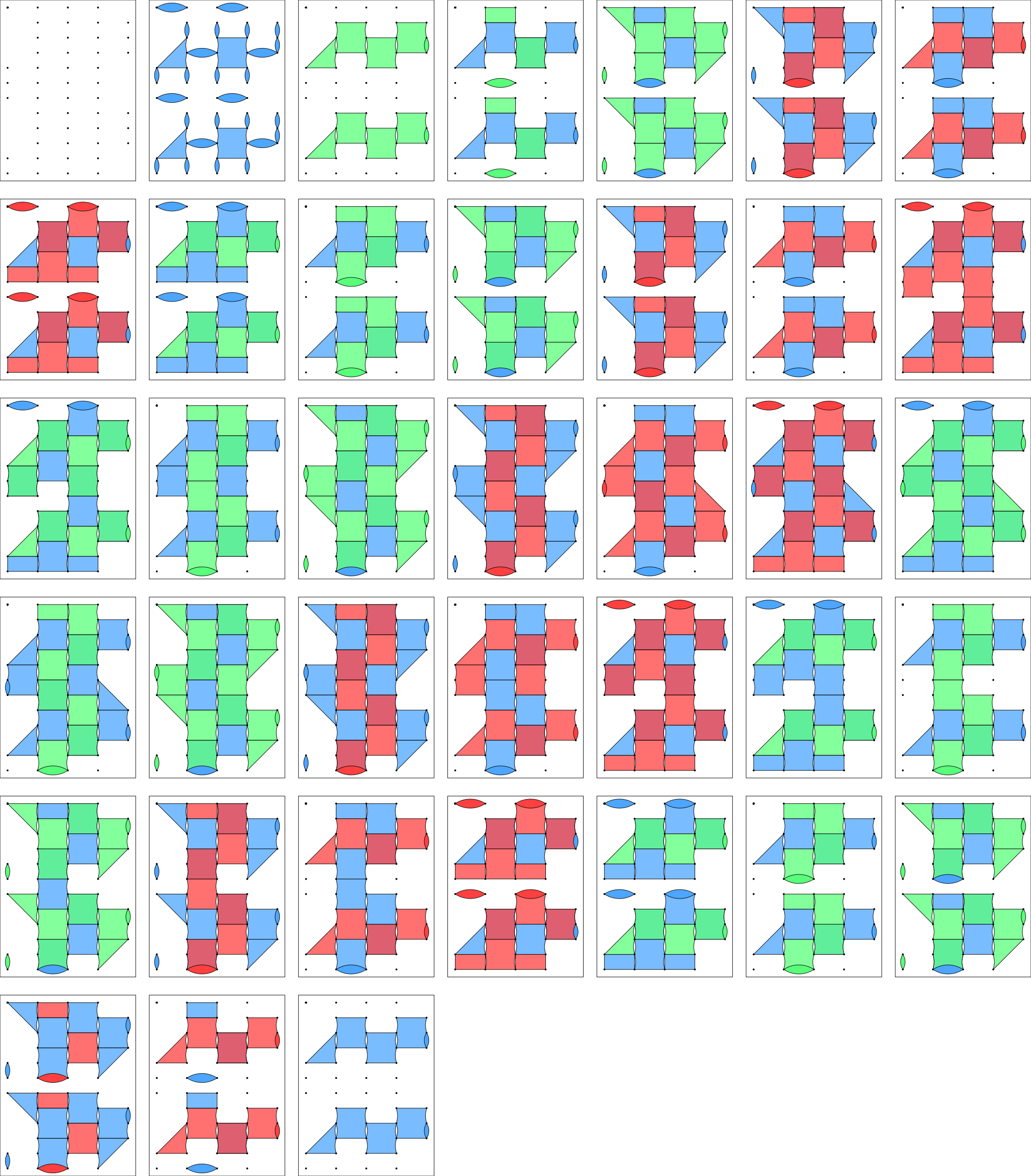
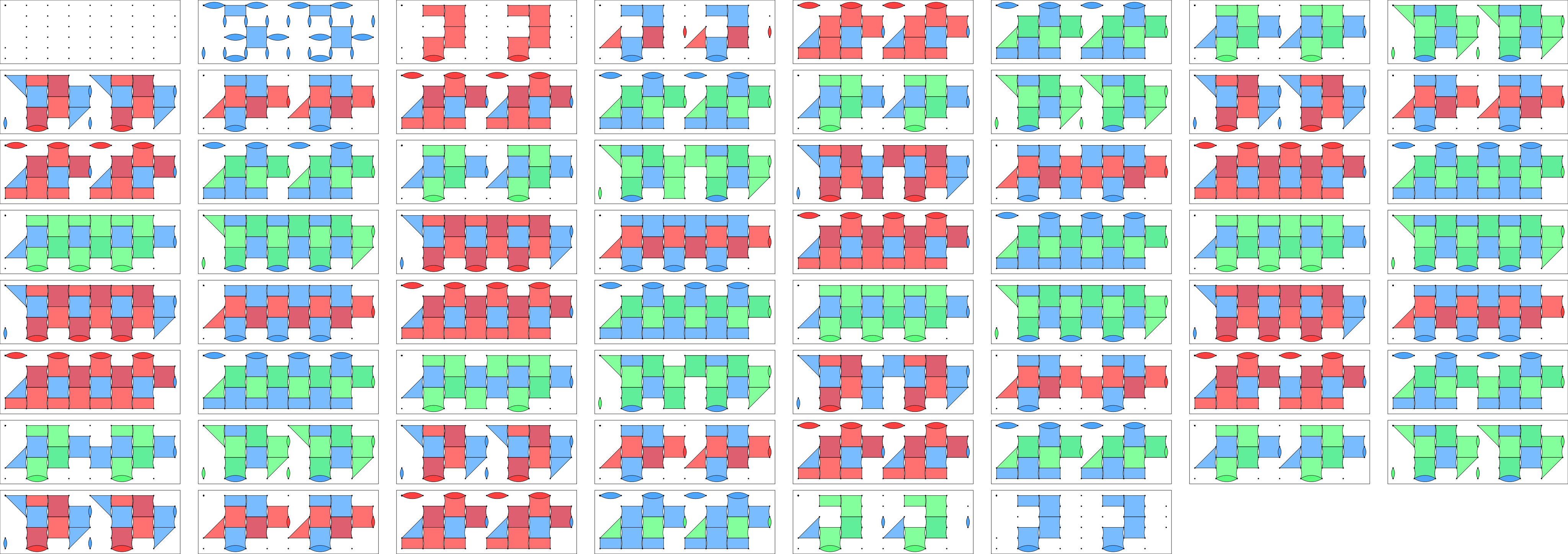
CNot gate
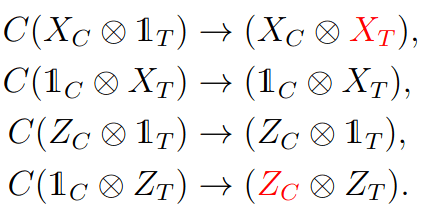
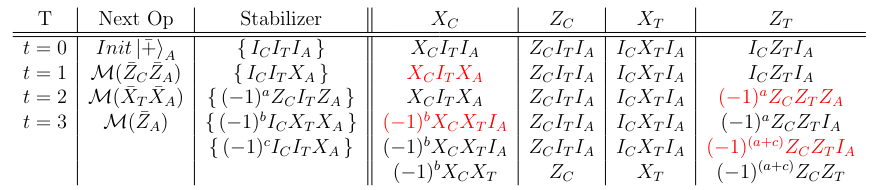
CNot gate
Init\ket{\bar{0}}_A \xrightarrow{} \mathcal{M} (\bar{X}_A\bar{X}_T)\\
\xrightarrow{} \mathcal{M}(\bar{Z}_C\bar{Z}_A)\xrightarrow{} \mathcal{M}(\bar{X}_A)
Init\ket{\bar{+}}_A \xrightarrow{} \mathcal{M}(\bar{Z}_C\bar{Z}_A) \\
\xrightarrow{} \mathcal{M} (\bar{X}_A\bar{X}_T)\xrightarrow{} \mathcal{M}(\bar{Z}_A)
Space time diagram
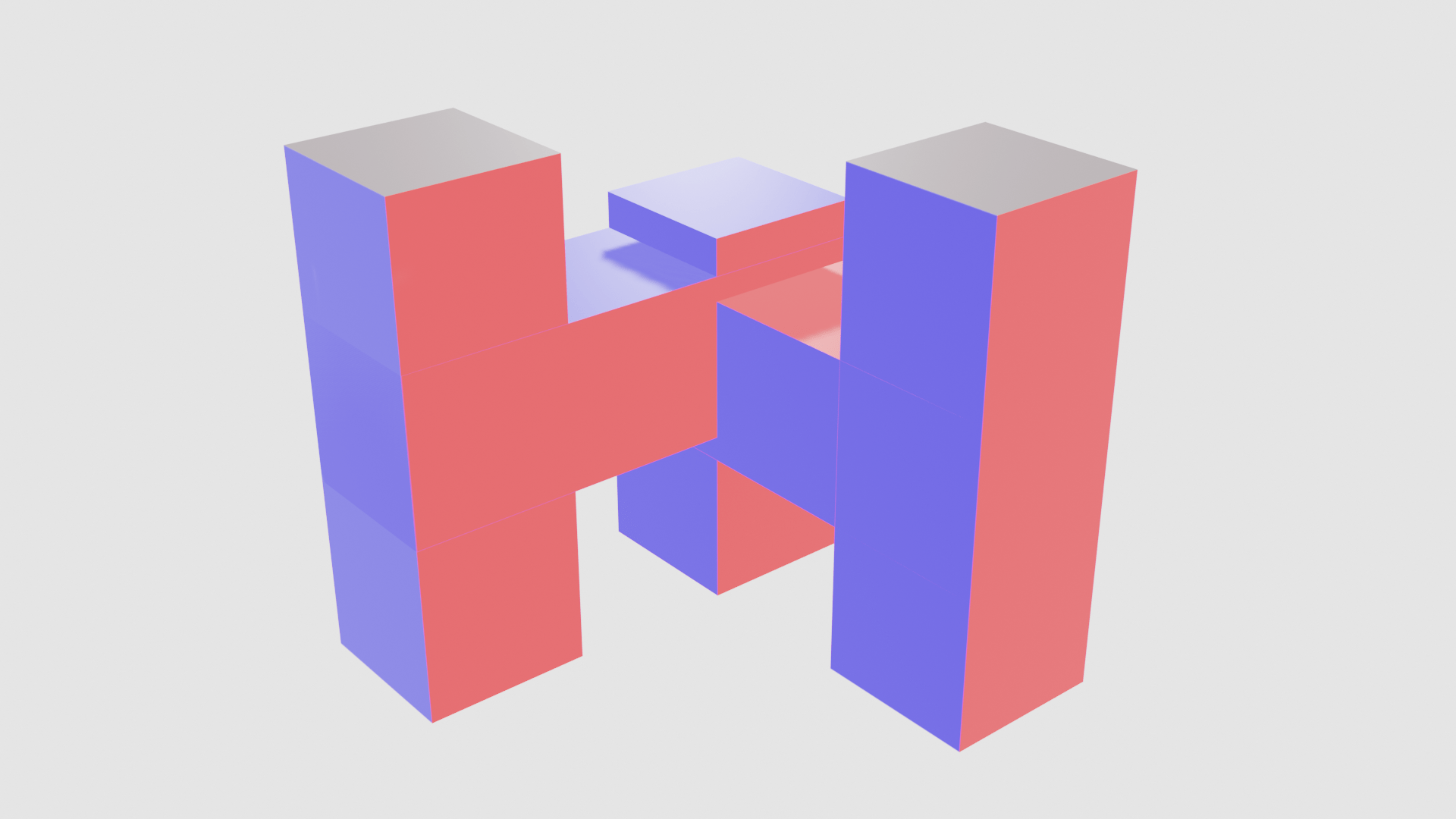
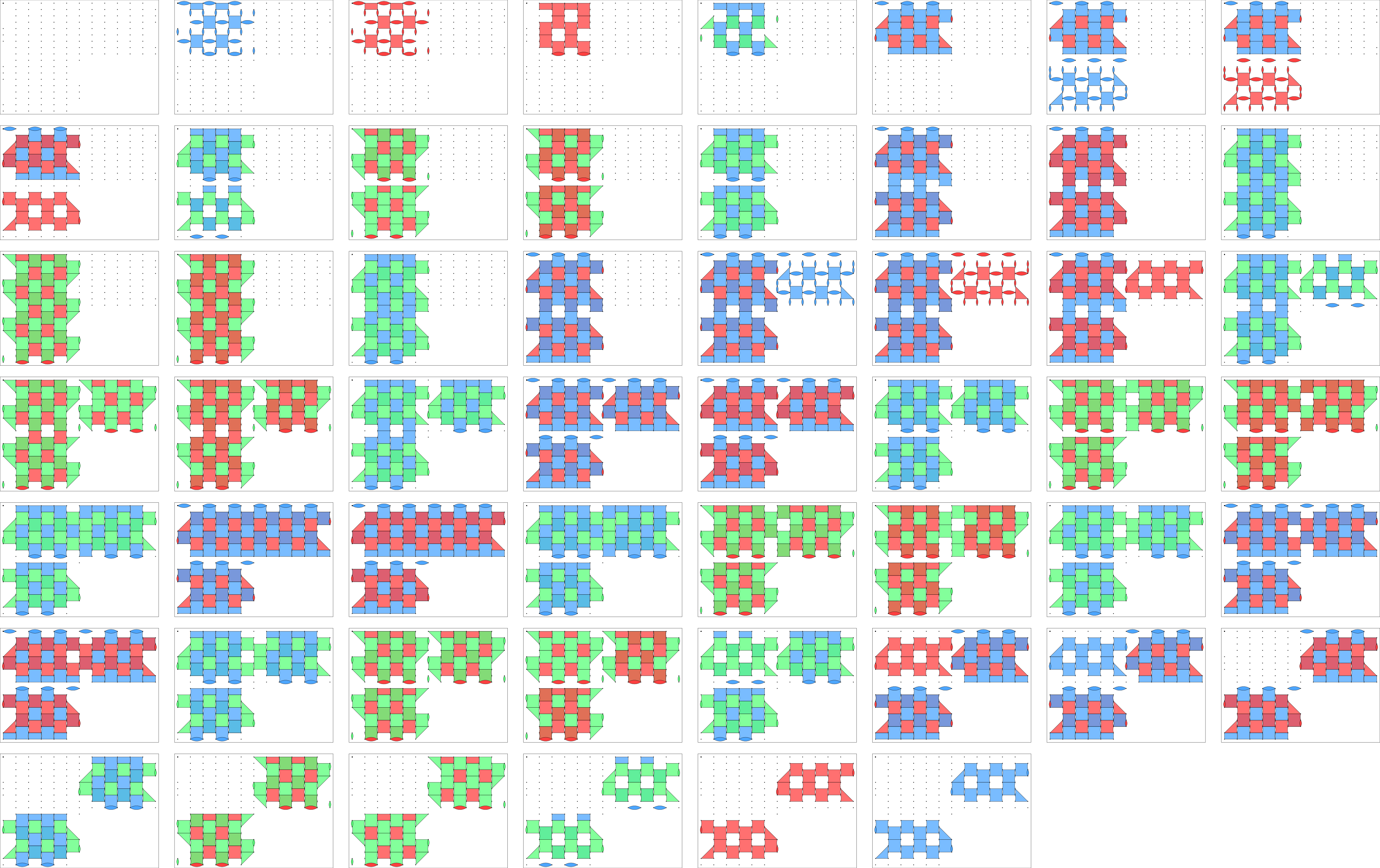
Journey Through Quantum Error Correction
- Introduction
- The Toric Code
- The Toric Honeycomb Floquet Code (THFC)
- Cutting Slices
- Transversal Operators
- Lattice Surgery (LS)
- Prospects
Idea of Fault Tolerance
The Steane Code
\begin{align*}
& IIIXXXX \\
& IXXIIXX \\
& XIXIXIX \\
& IIIZZZZ \\
& IZZIIZZ \\
& ZIZIZIZ
\end{align*}
\bar{U} = U^{\otimes n}
The Steane Code
\begin{align*}
& IIIXXXX \\
& IXXIIXX \\
& XIXIXIX \\
& IIIZZZZ \\
& IZZIIZZ \\
& ZIZIZIZ
\end{align*}
\begin{align*}
\bar{X} & = XXXXXXX \\
\bar{Z} & = ZZZZZZZ.
\end{align*}
\bar{U} = U^{\otimes n}
Surface Code Example
S = \sqrt{Z}
Surface Code Example
S = \sqrt{Z}
\bar{S} = S^{\otimes 9}
PHFC Example
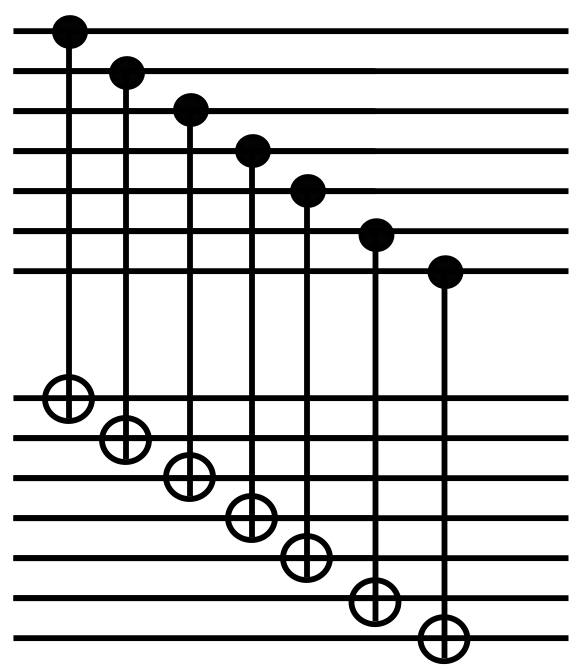
https://quantumcomputing.stackexchange.com/questions/24269/what-is-formally-a-transversal-operator
PHFC Example
https://quantumcomputing.stackexchange.com/questions/24269/what-is-formally-a-transversal-operator
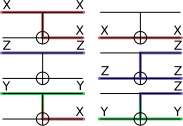
In PHFC
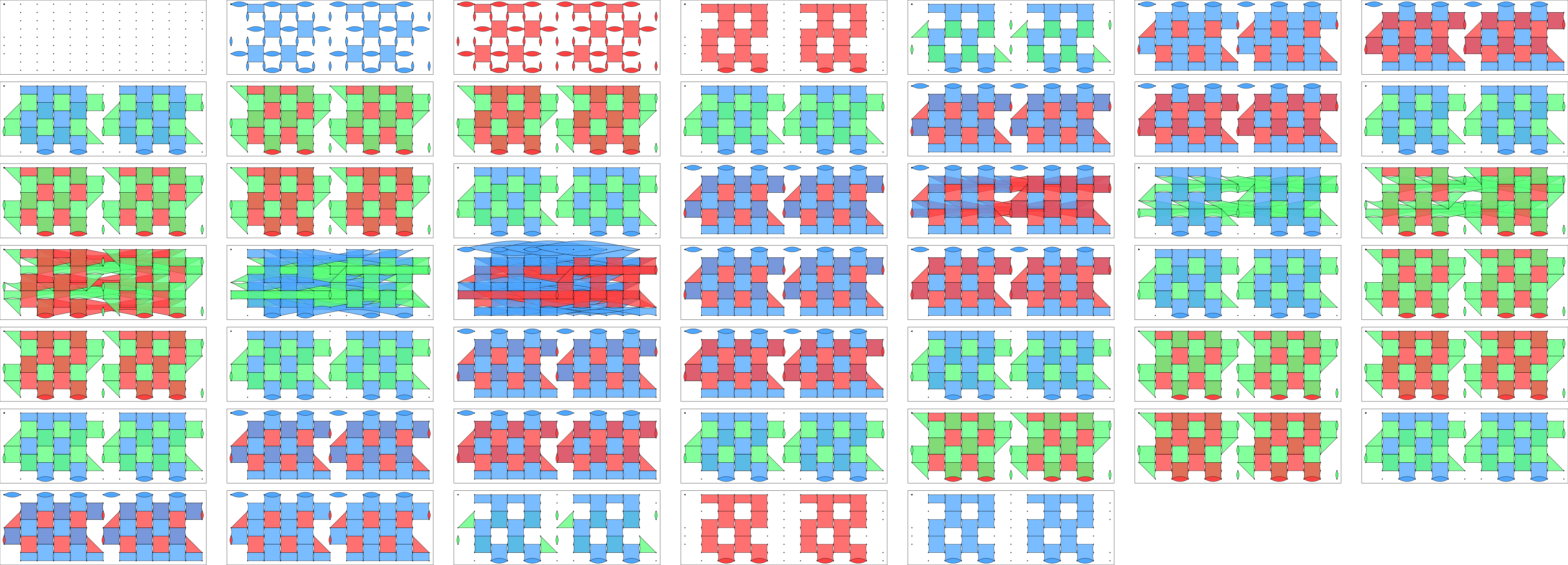
In PHFC
In PHFC
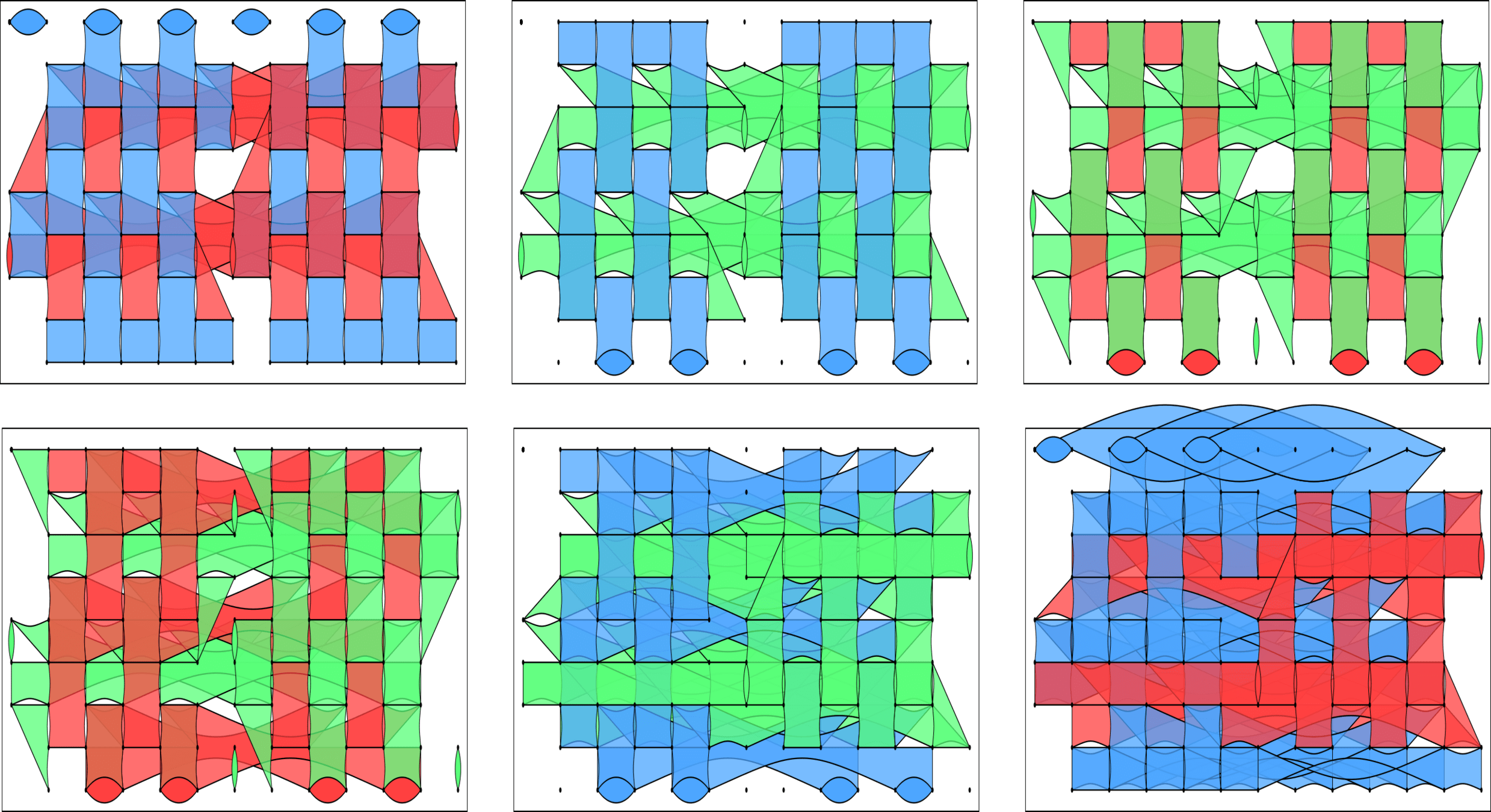
Z_a | {\color{red}X_b}
(X_bZ_b)Y_bX_aY_a(Z_a|X_b)
Z_a | {\color{red}X_b}
(X_bZ_b)Y_bX_aY_a(Z_a|X_b)
\mathcal{G}^C = r^C(-7)r^C(-6)r^C(-2)r^C(-1)\\
\mathcal{G}^T = r^T(-7)r^T(-6)r^T(-2)r^T(-1)
Z_a | {\color{red}X_b}
Z_a | {\color{red}X_b}
(X_bZ_b)Y_bX_aY_a(Z_a|X_b)
\begin{align*}
\mathcal{G}^C &= r^C(-7)r^C(-6)r^C(-2)r^C(-1)\\
& \times {\color{red} r^T(-7)r^T(-6)r^T(-2)} \\
\mathcal{G}^T &= r^T(-7)r^T(-6)r^T(-2)r^T(-1)
\end{align*}
Z_a | X_b {\color{blue}Z_b}
Z_a | X_b {\color{blue}Z_b}
(Z_a)|X_b (Z_b)
Z_a | X_b {\color{blue}Z_b}
\begin{align*}
\mathcal{G}^C &= r^C(-3)r^C(-1)\\
\mathcal{G}^T &= r^T(-3)r^T(-1)
\end{align*}
(Z_a)|X_b (Z_b)
Z_a | X_b {\color{blue}Z_b}
\begin{align*}
\mathcal{G}^C &= r^C(-3)r^C(-1)\\
\mathcal{G}^T &= r^T(-3)r^T(-1)\\
&\times {\color{blue}r^C(-3)}
\end{align*}
(Z_a)|X_b (Z_b)
Z_a | X_b Z_b{\color{green}Y_b}
Z_a | X_b Z_b{\color{green}Y_b}
(Y_aZ_a)|X_b (Z_bY_b)
Z_a | X_b Z_b{\color{green}Y_b}
\begin{align*}
\mathcal{R}^C &= r^C(-5)r^C(-4)r^C(-2)r^C(-1)\\
\mathcal{R}^T &= r^T(-5)r^T(-4)r^T(-2)r^T(-1)
\end{align*}
(Y_aZ_a)|X_b (Z_bY_b)
Z_a | X_b Z_b{\color{green}Y_b}
\begin{align*}
\mathcal{R}^C &= r^C(-5)r^C(-4)r^C(-2)r^C(-1)\\
& \times {\color{red}r^T(-5)r^T(-4)}\\
\mathcal{R}^T &= r^T(-5)r^T(-4)r^T(-2)r^T(-1)
\end{align*}
(Y_aZ_a)|X_b (Z_bY_b)
Z_a | X_b Z_bY_b{\color{red}X_a}
Z_a | X_b Z_bY_b{\color{red}X_a}
(X_aY_a)Z_a|X_bZ_b(Y_bX_a)
Z_a | X_b Z_bY_b{\color{red}X_a}
\begin{align*}
\mathcal{B}^C &= r^C(-7)r^C(-6)r^C(-2)r^C(-1)\\
\mathcal{B}^T &= r^T(-7)r^T(-6)r^T(-2)r^T(-1)
\end{align*}
(X_aY_a)Z_a|X_bZ_b(Y_bX_a)
Z_a | X_b Z_bY_b{\color{red}X_a}
\begin{align*}
\mathcal{B}^C &= r^C(-7)r^C(-6)r^C(-2)r^C(-1)\\
\mathcal{B}^T &= r^T(-7)r^T(-6)r^T(-2)r^T(-1)\\
& \times {\color{blue}r^C(-7)r^C(-6)}
\end{align*}
(X_aY_a)Z_a|X_bZ_b(Y_bX_a)
Z_a | X_b Z_bY_bX_a{\color{green}Y_a}
Z_a | X_b Z_bY_bX_a{\color{green}Y_a}
(Y_b)X_a(Y_a)
Z_a | X_b Z_bY_bX_a{\color{green}Y_a}
(Y_b)X_a(Y_a)
\begin{align*}
\mathcal{B}^C &= r^C(-3)r^C(-1)\\
\mathcal{B}^T &= r^T(-3)r^T(-1)
\end{align*}
Z_a | X_b Z_bY_bX_a{\color{green}Y_a}
(Y_b)X_a(Y_a)
\begin{align*}
\mathcal{B}^C &= r^C(-3)r^C(-1)\\
\mathcal{B}^T &= r^T(-3)r^T(-1)
\end{align*}

Z_a | X_b Z_bY_bX_aY_a{\color{blue}Z_a}
Z_a | X_b Z_bY_bX_aY_a{\color{blue}Z_a}
(Z_bY_b)X_a(Y_aZ_a)
Z_a | X_b Z_bY_bX_aY_a{\color{blue}Z_a}
(Z_bY_b)X_a(Y_aZ_a)
\begin{align*}
\mathcal{R}^C &= r^C(-5)r^C(-4)r^C(-2)r^C(-1)\\
\mathcal{R}^T &= r^T(-5)r^T(-4)r^T(-2)r^T(-1)
\end{align*}
Z_a | X_b Z_bY_bX_aY_a{\color{blue}Z_a}
(Z_bY_b)X_a(Y_aZ_a)
\begin{align*}
\mathcal{R}^C &= r^C(-5)r^C(-4)r^C(-2)r^C(-1)\\
\mathcal{R}^T &= r^T(-5)r^T(-4)r^T(-2)r^T(-1)
\end{align*}

Z_a | X_b Z_bY_bX_aY_aZ_a{\color{red}X_b}
Z_a | X_b Z_bY_bX_aY_aZ_a{\color{red}X_b}
(X_b Z_b)Y_bX_aY_a(Z_aX_b)
Z_a | X_b Z_bY_bX_aY_aZ_a{\color{red}X_b}
(X_b Z_b)Y_bX_aY_a(Z_aX_b)
\begin{align*}
\mathcal{G}^C &= r^C(-7)r^C(-6)r^C(-2)r^C(-1)\\
\mathcal{G}^T &= r^T(-7)r^T(-6)r^T(-2)r^T(-1)
\end{align*}
Z_a | X_b Z_bY_bX_aY_aZ_a{\color{red}X_b}
(X_b Z_b)Y_bX_aY_a(Z_aX_b)
\begin{align*}
\mathcal{G}^C &= r^C(-7)r^C(-6)r^C(-2)r^C(-1)\\
\mathcal{G}^T &= r^T(-7)r^T(-6)r^T(-2)r^T(-1)
\end{align*}

In PHFC
Journey Through Quantum Error Correction
- Introduction
- The Toric Code
- The Toric Honeycomb Floquet Code (THFC)
- Cutting Slices
- Transversal Operators
- Lattice Surgery (LS)
- Prospects
Important notions
-
Stabilizer codes
-
Distance of a code
-
'Good codes'
-
Logical operators
-
Minimum Weight Perfect Matching
-
Ancilla measurements
-
Error Correcting
-
Fault tolerance
-
Transversal operators
-
Lattice Surgery
Future ideas
- Publish the results comparing the two techniques
- Compare different implementations of the planar codes (there exist a CSS version)
- Test experimentally perhaps
Copy of Quantum Error Correction and the Floquet Codes
By Julien Bréhier