









Content ITV PRO
This is Itvedant Content department
AIF Categories
Learning Outcome
5
Assess suitability for different investors.
4
Learn the role of leverage and risk.
3
Understand their investment focus and features.
2
Differentiate Category I, II, and III AIFs.
1
Define AIFs and their SEBI regulatory framework.
Analogy: AIF Categories as Business Departments
Category I AIFs invest in startups, SMEs, and infrastructure projects, supporting innovation and long-term economic growth.
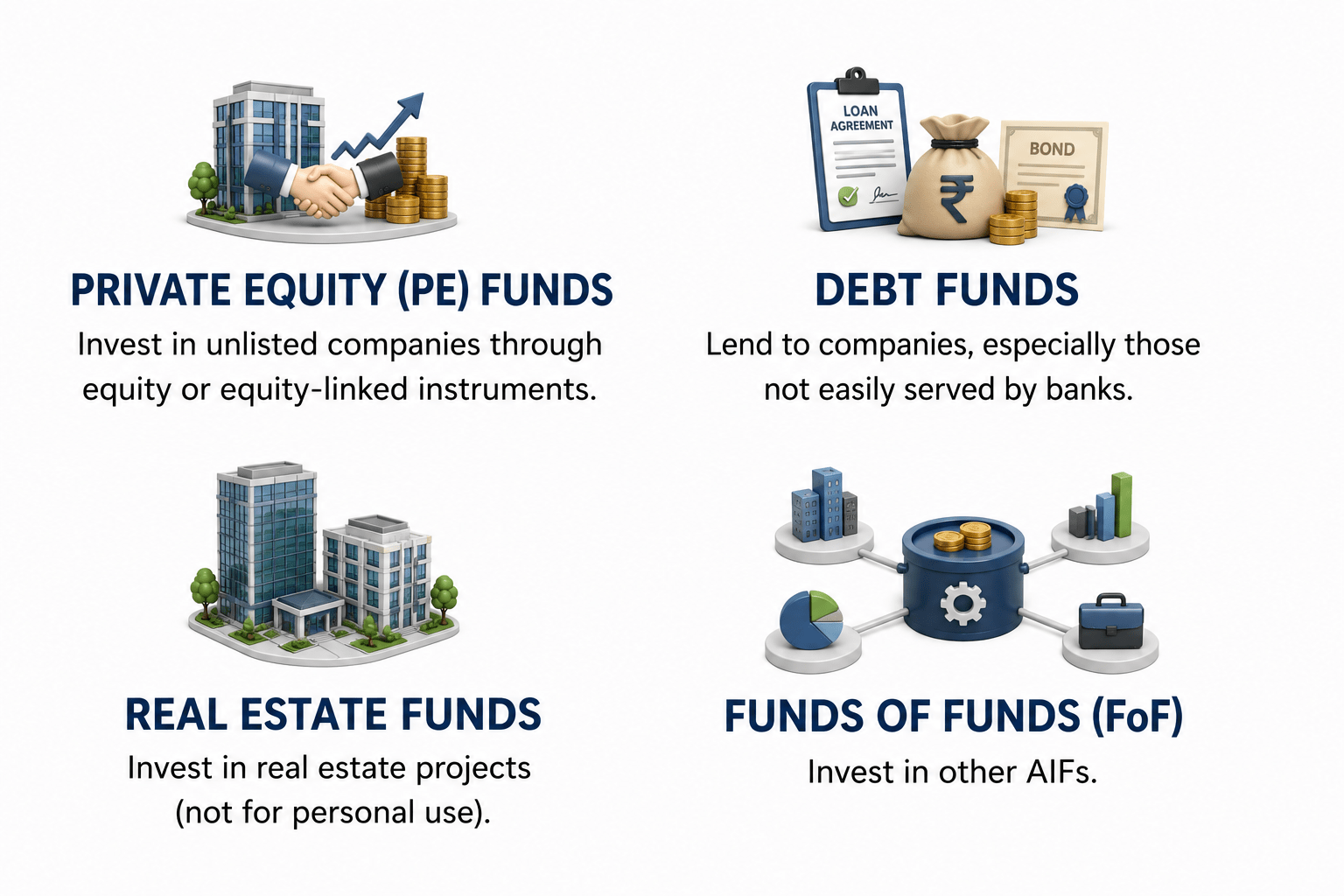
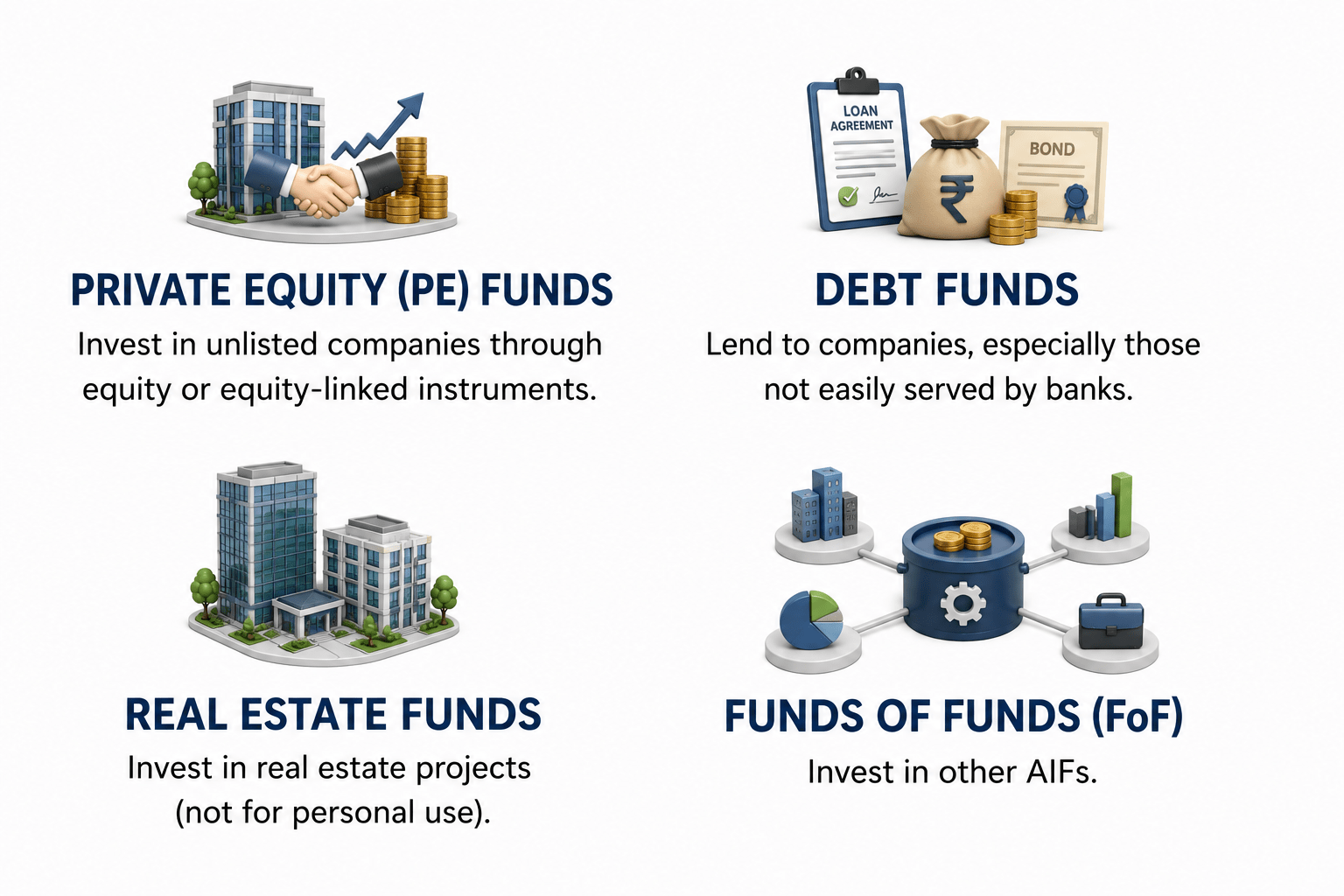
Category II AIFs invest in private equity and debt funds, offering structured and professionally managed investments.
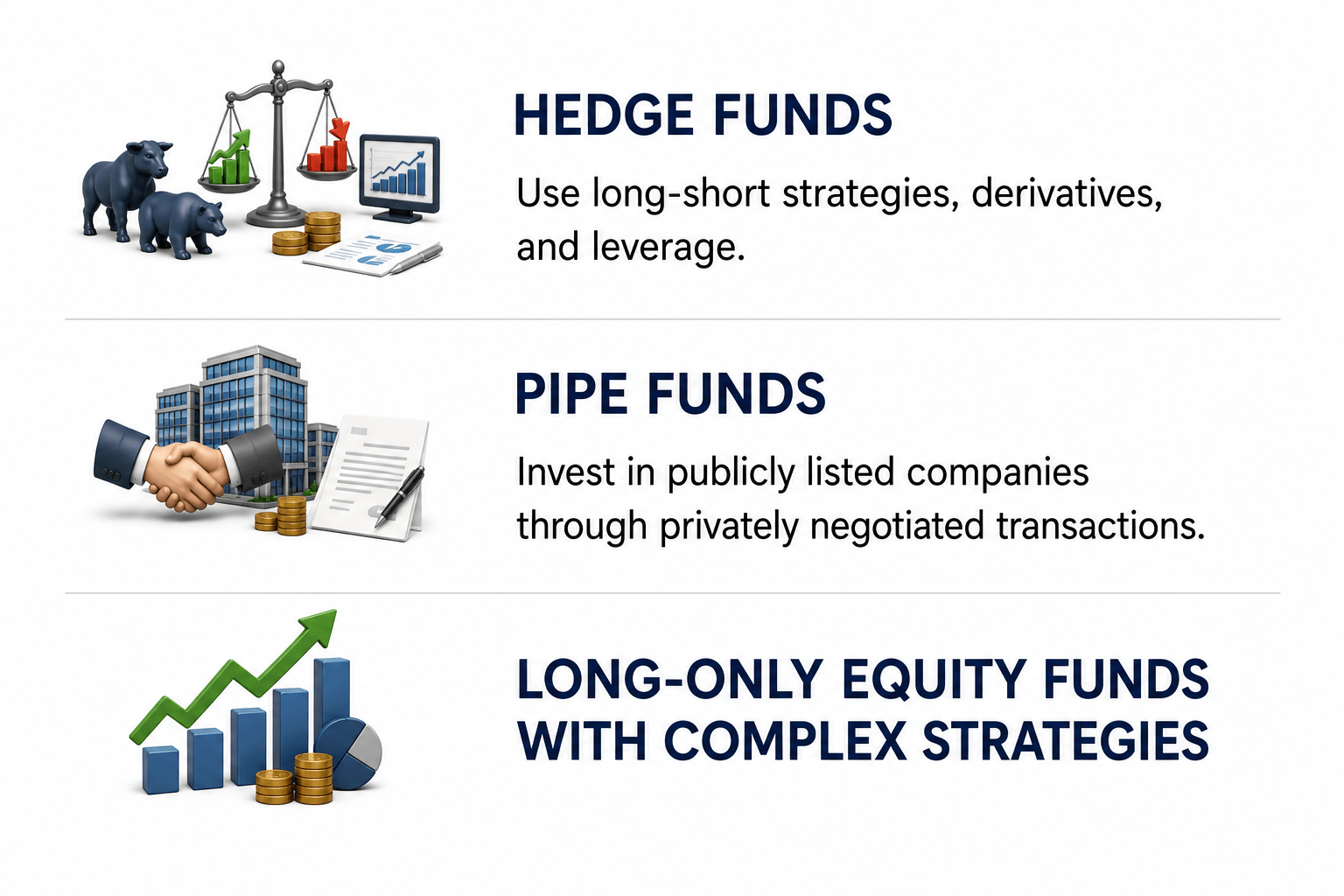
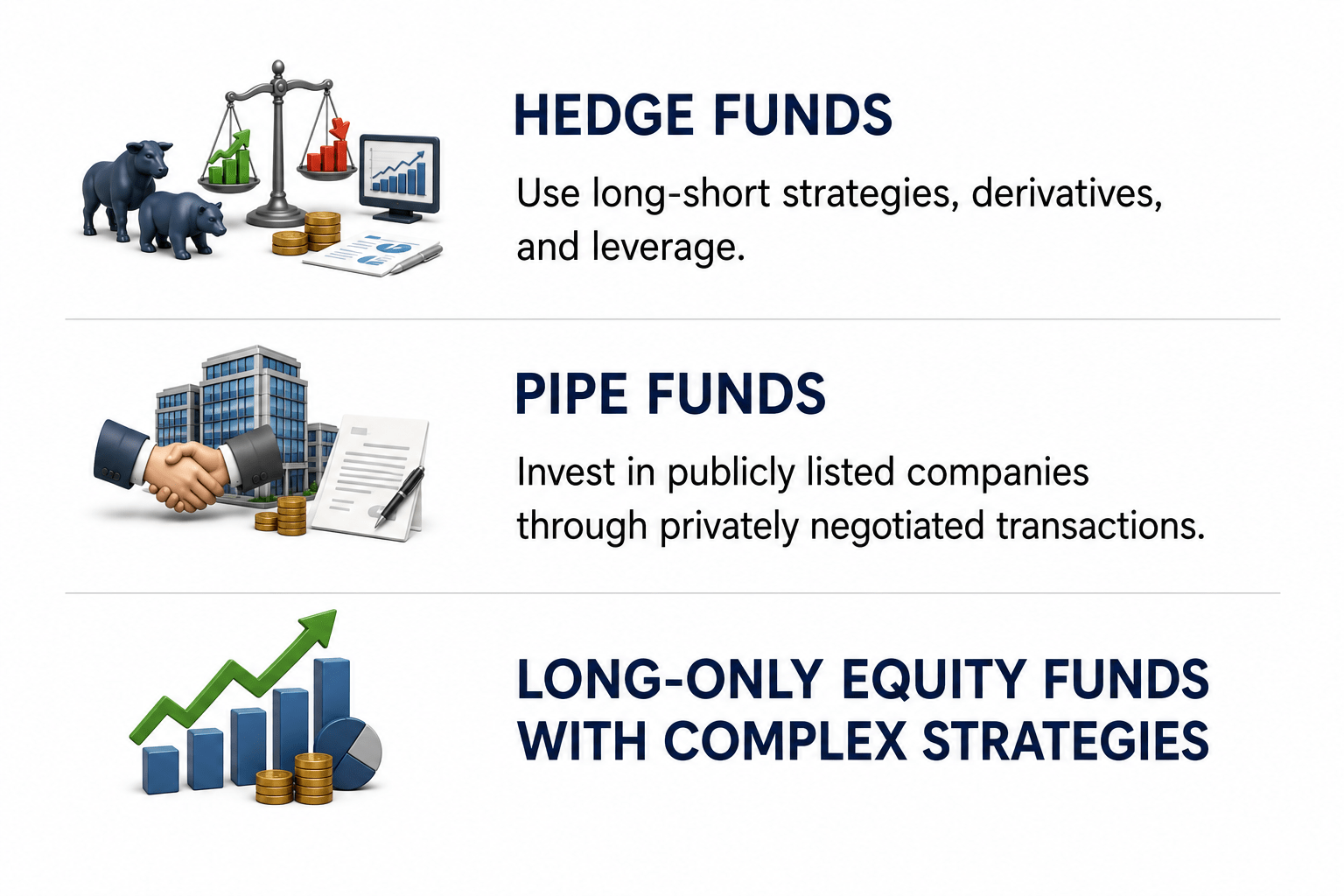
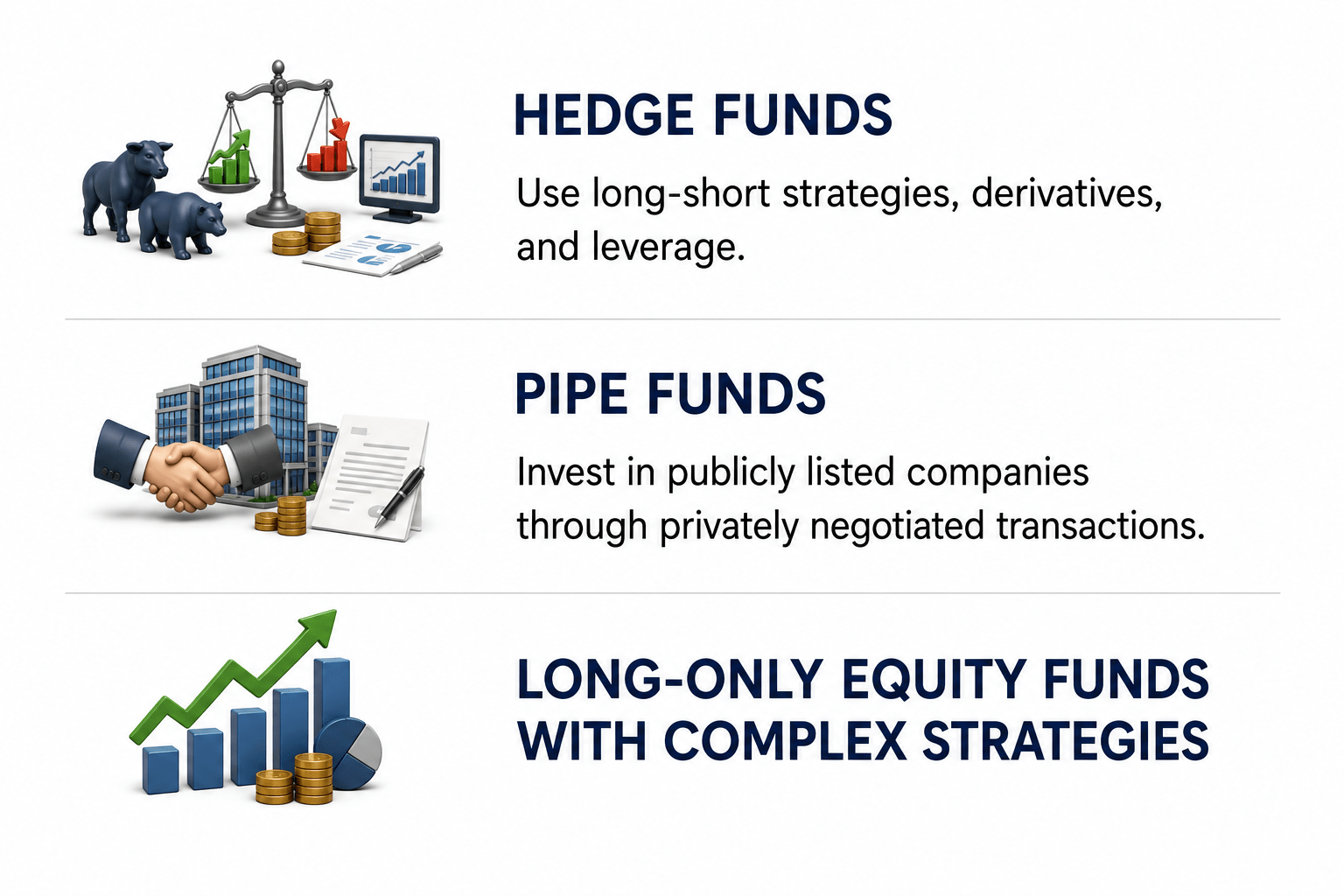
Category III AIFs use advanced strategies and higher risk to pursue potentially higher returns.
What is an Alternative Investment Fund?
An AIF is a privately pooled investment vehicle that invests in assets beyond traditional stocks, bonds, and cash.
Category I AIF
Category I AIFs invest in sectors that the government or SEBI considers economically or socially desirable. These funds receive special incentives and concessions.
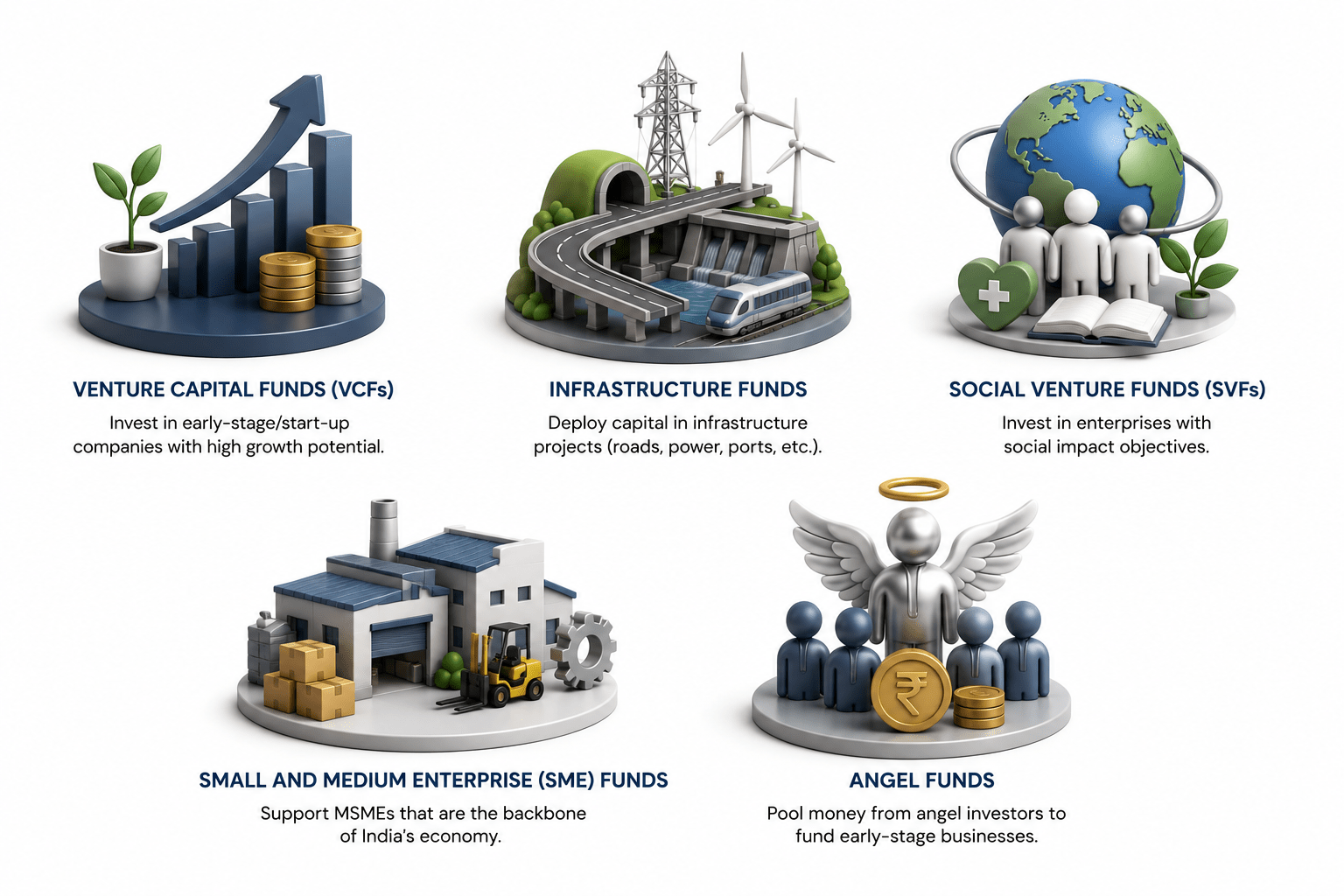
Venture Capital Funds (VCFs) — Invest in early-stage/start-up companies with high growth potential.
Social Venture Funds (SVFs) — Invest in enterprises with social impact objectives.
Infrastructure Funds — Deploy capital in infrastructure projects (roads, power, ports, etc.).
Small and Medium Enterprise (SME) Funds — Support MSMEs that are the backbone of India's economy.
Angel Funds — Pool money from angel investors to fund early-stage businesses.
Key Features:
Category II AIF
Category II AIFs do not fall under Category I or III and do not engage in leverage or borrowing, except for day-to-day operational purposes. They are the most common form of AIF.
Key Features:
Category I|I AIF
Category III AIFs employ diverse and complex trading strategies to generate short-term returns. They are the most sophisticated category and are closest to what the global market calls Hedge Funds.
Key Features:
Summary
5
AIFs require high investment and are SEBI-regulated.
4
Category III uses advanced strategies and leverage.
3
Category II includes private equity and debt funds.
2
Category I supports startups, SMEs, and infrastructure.
1
AIFs pool money for alternative investments.
Quiz
What is an Alternative Investment Fund (AIF)?
A. A government savings scheme
B. A privately pooled investment vehicle
C. A fixed deposit product
D. A public insurance scheme
Quiz-Answer
What is an Alternative Investment Fund (AIF)?
A. A government savings scheme
B. A privately pooled investment vehicle
C. A fixed deposit product
D. A public insurance scheme
By Content ITV