



































Content ITV PRO
This is Itvedant Content department
Learning Outcome
4
Map attacks using the ATT&CK Matrix.
3
Describe ATT&CK tactics and attack stages.
2
Differentiate Tactics, Techniques, and Sub-Techniques.
1
Explain MITRE ATT&CK’s purpose.
5
Explain ATT&CK use in SOC operations.
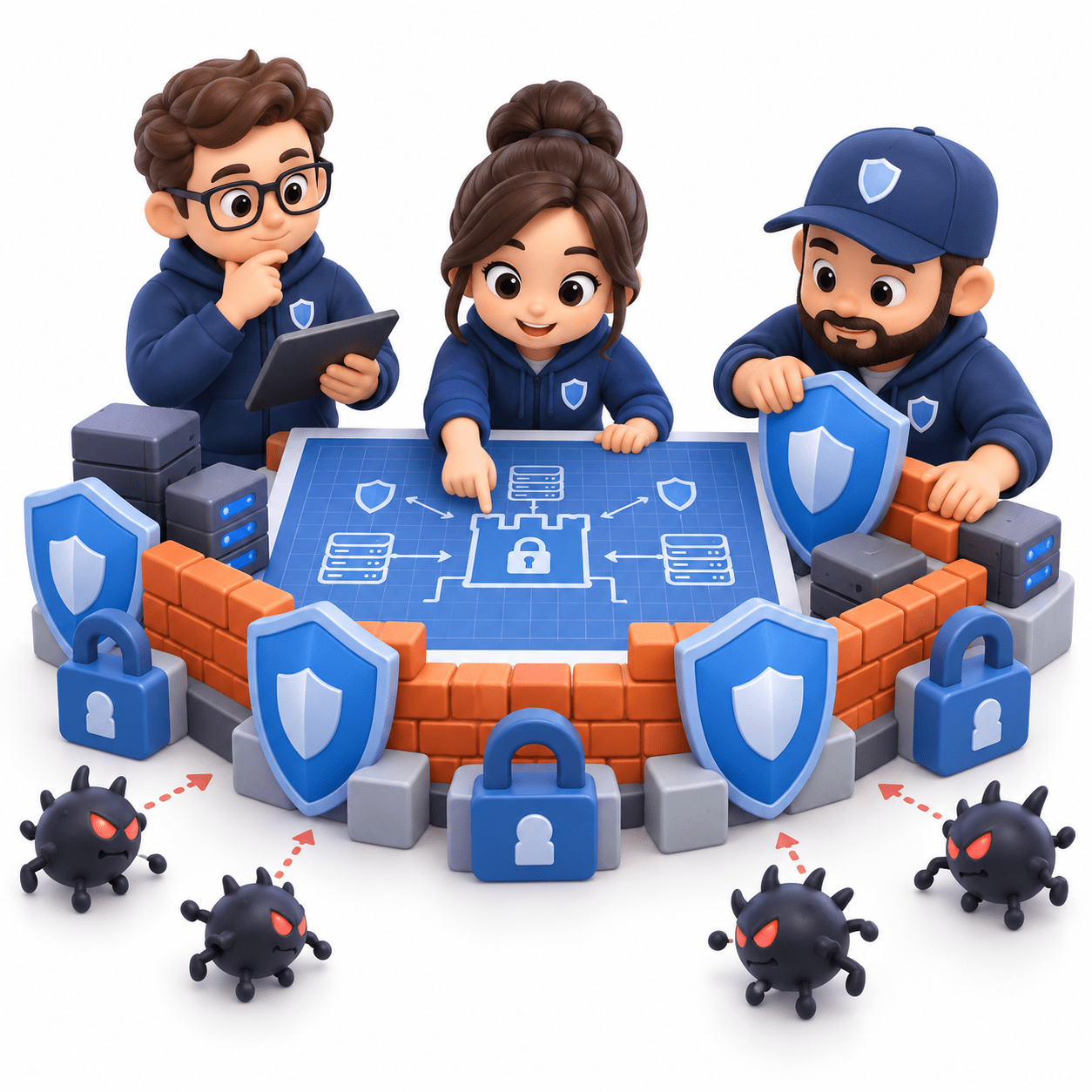
Before an important football match, a team studies its opponent’s playbook to understand the different moves they may use.
Playbook = MITRE ATT&CK Framework
The team learns that the opponent may use different strategies to attack, such as passing, dribbling, or making quick runs.
Attack strategies = Tactics;
Specific attack methods = Techniques
During the match, players recognize a familiar attacking move because they studied the playbook earlier.
They quickly prepare the right defense.
Recognizing attacker behavior = Threat Detection
The defenders use the right defensive move and stop the opponent from reaching the goal.
Stopping the attack = Defense and Incident Response
In cybersecurity, MITRE ATT&CK works like this football playbook. It documents common tactics and techniques used by attackers. Security teams study them to recognize attacks, detect suspicious behavior, investigate threats, and improve defenses.
What is MITRE ATT&CK?
MITRE ATT&CK (Adversarial Tactics, Techniques, and Common Knowledge) is a globally recognized cybersecurity framework that documents how real-world attackers operate.
It organizes attacker behavior into tactics, techniques, and procedures (TTPs) to help security teams understand, detect, and respond to threats.
It is widely used by SOC analysts, threat hunters, incident responders, and security teams.
History of MITRE ATT&CK
Developed by MITRE in 2013 based on real-world cyberattack research.
Initially focused on attacker techniques against enterprise environments.
Expanded to cover cloud, mobile, and industrial control systems.
Regularly updated to reflect emerging threats and techniques.
Importance in Cybersecurity
Provides a common language for describing attacker behavior.
Helps improve detection, investigation, and response.
Helps identify security gaps and strengthen defenses.
Purpose of the Framework
ATT&CK documents how attackers operate and provides a structured approach for:
Understanding attack techniques
Improving threat detection
Developing defensive strategies
Supporting proactive threat hunting
ATT&CK Knowledge Base
ATT&CK contains information about real-world attacker behavior. Each technique includes:
Attack method description
Detection recommendations
Mitigation strategies
Real-world examples
Real-World Adversary Behavior
ATT&CK is based on observed attacker behavior, rather than only theoretical models. It helps security teams understand how attackers gain access, move through networks, steal data, and achieve objectives.
Key Concepts of MITRE ATT&CK
Tactics
Tactics represent what an attacker wants to achieve.
Examples:
Initial Access
Credential Access
Exfiltration
Techniques
Techniques describe how attackers achieve their objectives.
Examples:
Tactic: Initial Access
Technique: Phishing
Sub-Techniques
Sub-techniques provide more specific details about a technique.
Benefits:
Better detection accuracy
Detailed threat analysis
Improved investigations
ATT&CK Tactics Overview
Tactic
Purpose
Reconnaissance
Resource Development
Initial Access
Gather information about the target.
Create or obtain resources for an attack.
Gain entry into the target environment.
Execution
Persistence
Privilege Escalation
Run malicious code or commands.
Maintain access to compromised systems.
Gain higher levels of access.
Defense Evasion
Credential Access
Discovery
Avoid detection by security tools.
Obtain passwords and authentication information.
Gather information about systems, usersnetworks.
Lateral Movement
Collection
Move between systems within the environment.
Gather data of interest.
Command and Control
Exfiltration
Impact
Communicate with and control compromised systems.
Transfer stolen data outside the environment.
Disrupt operations or damage systems/data.
What is the ATT&CK Matrix?
The ATT&CK Matrix is a visual representation of tactics and techniques that helps security teams understand attacker behavior.
Structure
Tactics
Columns
Helps analysts understand attack progression and map attacker activities.
Techniques
Listed under the relevant tactics
ATT&CK Data Sources
Organizations use different data sources to detect ATT&CK techniques:
Authentication Logs:
Login and account activities.
Network Traffic:
Communication between systems.
Endpoint Telemetry:
Process Logs:
Programs and commands executed.
Cloud Logs:
Activities in cloud environments.
Activities on endpoints.
MITRE ATT&CK and SOC Operations
Threat Detection
Identify attacker techniques and improve detection.
1
Alert Investigation
Understand attacker behavior and investigate alerts.
2
Incident Response
Identify attacker actions and affected systems.
3
Threat Hunting
Proactively search for hidden threats.
4
Security Monitoring
Ensure visibility across attack stages.
5
What is ATT&CK Mapping?
ATT&CK Mapping is the process of associating observed attacker activities with ATT&CK tactics and techniques.
Mapping Incidents
Security teams analyze alerts, logs, and evidence to identify techniques used during an attack.
Benefits
Standardized incident analysis
Better threat visibility
Improved detection coverage
Enhanced reporting
More effective incident response
Activity
ATT&CK Tactic
Phishing Email
PowerShell Execution
Credential Dumping
Initial Access
Execution
Credential Access
Example
ATT&CK Use Cases
Threat Detection
Create detection rules for attacker techniques.
Smart Layouts
AI arranges content beautifully for better flow and impact
Security Assessment
Identify gaps in security controls.
Incident Investigation
Understand attacker actions and timelines.
Threat Hunting
Proactively search for attacker activity.
Benefits of MITRE ATT&CK
Standardized Security Framework: Common language for attacker behavior.
Better Threat Visibility: Improves understanding of attacks.
Improved Detection Coverage: Supports effective detection rules.
Enhanced Incident Response: Provides investigation context.
Threat Hunting Support: Helps proactively identify threats.
Challenges of Using MITRE ATT&CK
Large Number of Techniques:
Can be difficult to learn and manage.
Continuous Updates:
Requires keeping up with framework changes.
Complexity for Beginners:
Its size can be overwhelming.
Resource Requirements:
Requires skilled people, tools, and maintenance.
MITRE ATT&CK vs Cyber Kill Chain
Understand attacker behavior
Improve security defenses
Similarities
Both frameworks help organizations:
Support detection, threat hunting, and incident response
Differences
Focuses on tactics and techniques
| Provides detailed attack methods |
Supports threat hunting and detection engineering
Contains many techniques
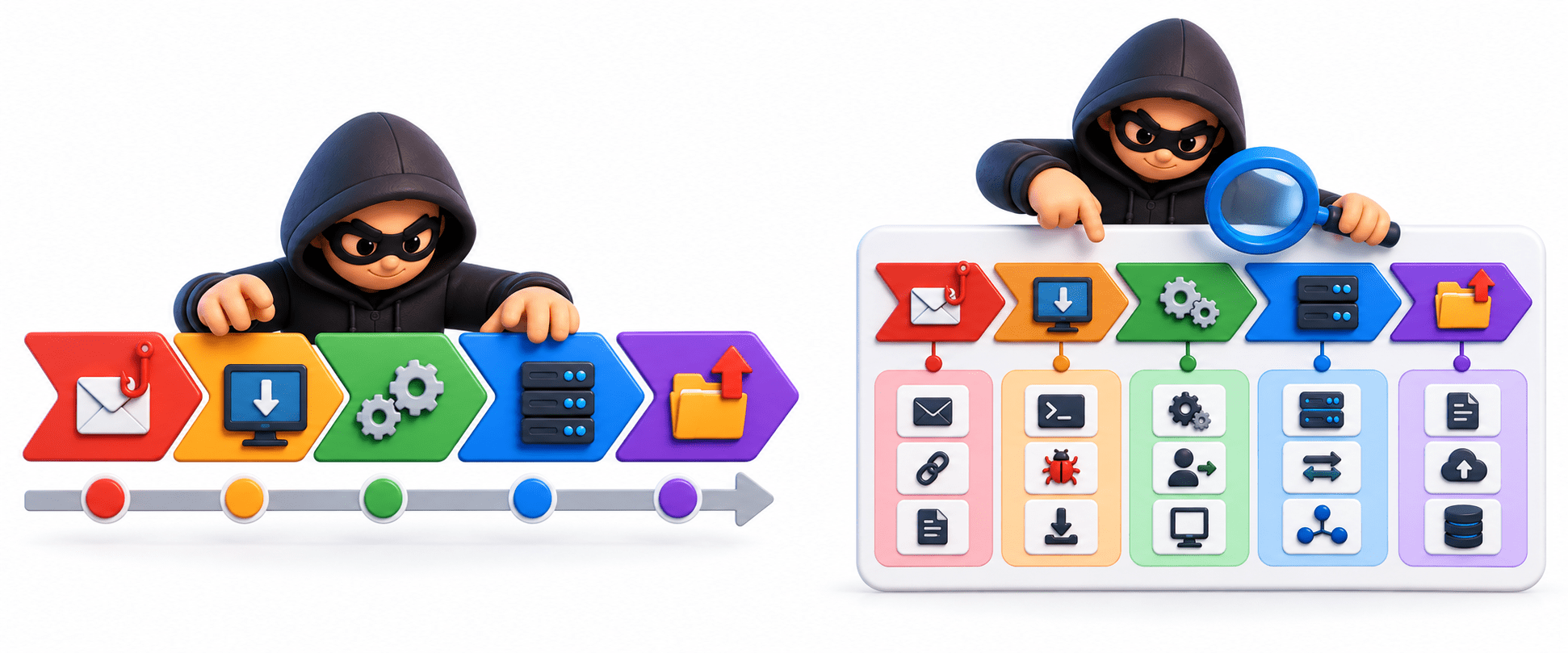
Focuses on attack stages
Provides high-level attack progression
Supports attack lifecycle analysis
Contains a limited number of phases
MITRE ATT&CK
Cyber Kill Chain
When to Use Each
Organizations can use both frameworks together:
Cyber Kill Chain →
Understands the overall attack progression.
MITRE ATT&CK →
Provides detailed visibility into the techniques used at each stage.
Summary
5
Helps SOC teams analyze and respond to threats.
4
The Matrix maps attacker tactics and techniques.
3
Supports detection, threat hunting, and incident response.
2
It organizes attacks into tactics, techniques, and sub-techniques.
1
ATT&CK documents real-world attacker behavior.
Quiz
Which ATT&CK concept represents the specific method an attacker uses to achieve an objective?
B. Matrix
C. Tactic
D. Technique
A. Procedure
Quiz-Answer
Which ATT&CK concept represents the specific method an attacker uses to achieve an objective?
A. Procedure
B. Matrix
C. Tactic
D. Technique
By Content ITV