The Pets Workshop
We are The Pets Workshop. Pet Care Redefined. We strive to redefine pet care by focusing on your fur-kids’ grooming experiences with us.
By The Pets Workshop
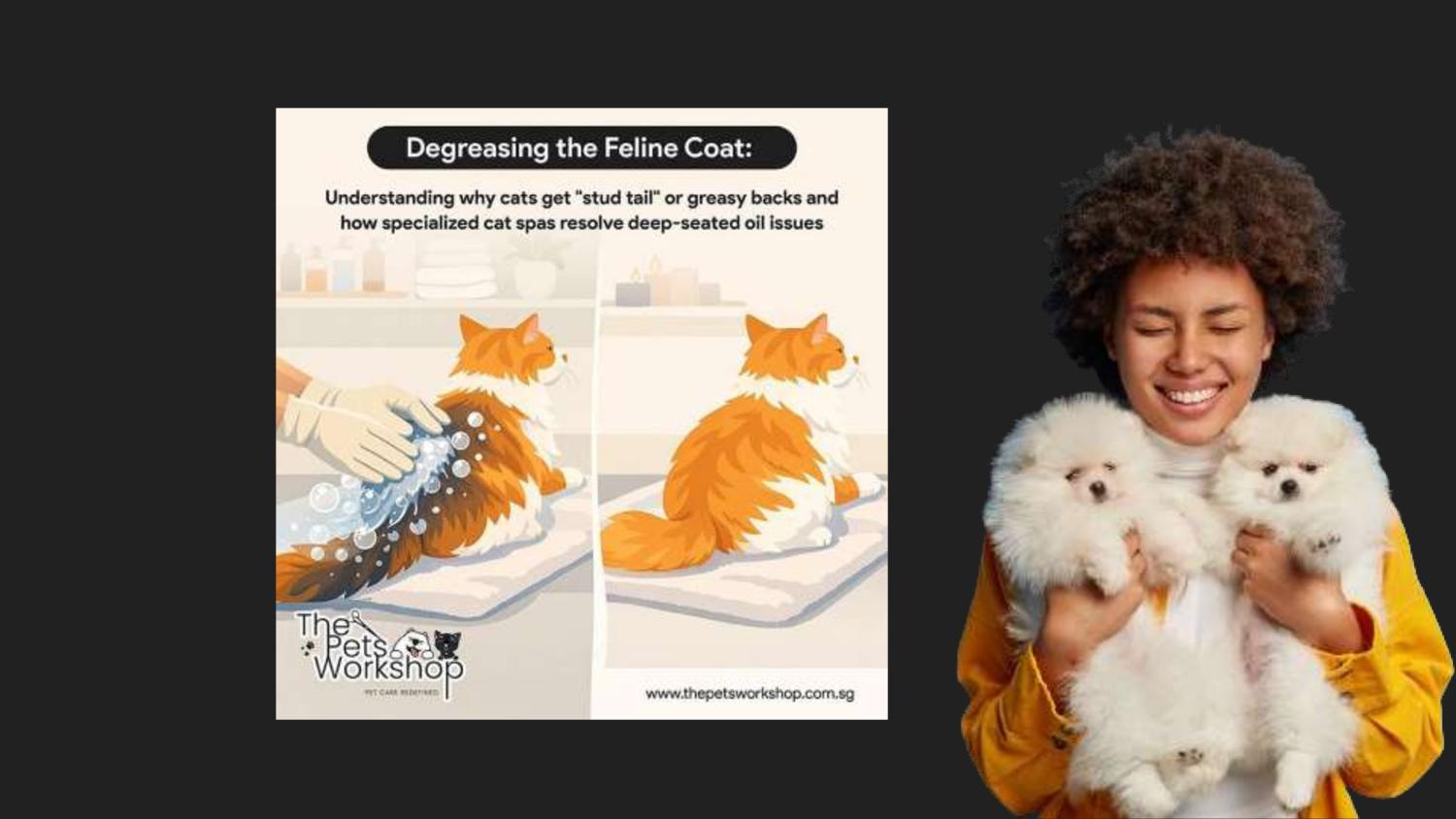
A sleek, shiny coat is often a hallmark of a healthy cat. However, some cats develop a greasy buildup at the base of their tails and along their lower backs, a condition commonly referred to as “stud tail” or feline tail gland hyperplasia. While the name may suggest a behavioral issue, the cause is largely physiological. Excessive oil production from the tail gland, combined with grooming habits and underlying health factors, leads to the visible greasy appearance that many cat owners notice. Understanding the causes, consequences, and solutions for this condition is essential for maintaining feline hygiene and overall well-being. The tail base of a cat contains a specialized sebaceous gland, which produces natural oils that coat the fur and skin. These oils serve several functions: they provide water resistance, protect against environmental irritants, and contribute to the cat’s unique scent markers. In most cats, these oils are distributed evenly through normal grooming behaviors. Cats are meticulous groomers, using their rough tongues to clean, detangle, and stimulate oil production across the coat. However, in certain cats, this balance is disrupted, leading to localized oil accumulation, particularly around the tail and lower back. Pop over here : https://www.thepetsworkshop.com.sg/