Commodities Market


Spot vs Futures
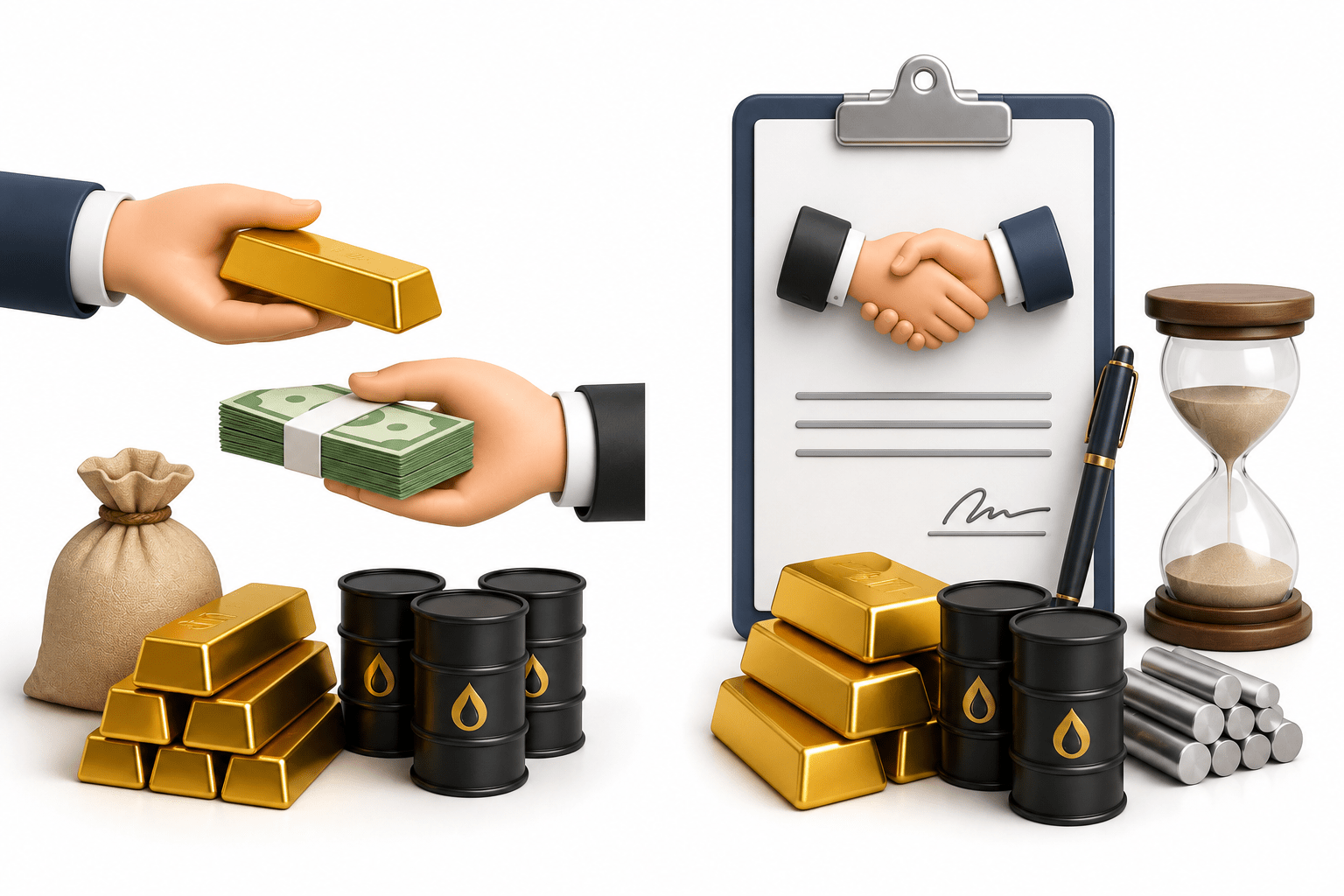

Learning Outcome
5
Compare Spot and Futures markets
4
Understand hedging and speculation with futures
3
Identify spot and futures prices
2
Understand immediate and future settlements
1
Differentiate Spot and Futures Markets
What is a Spot Market?
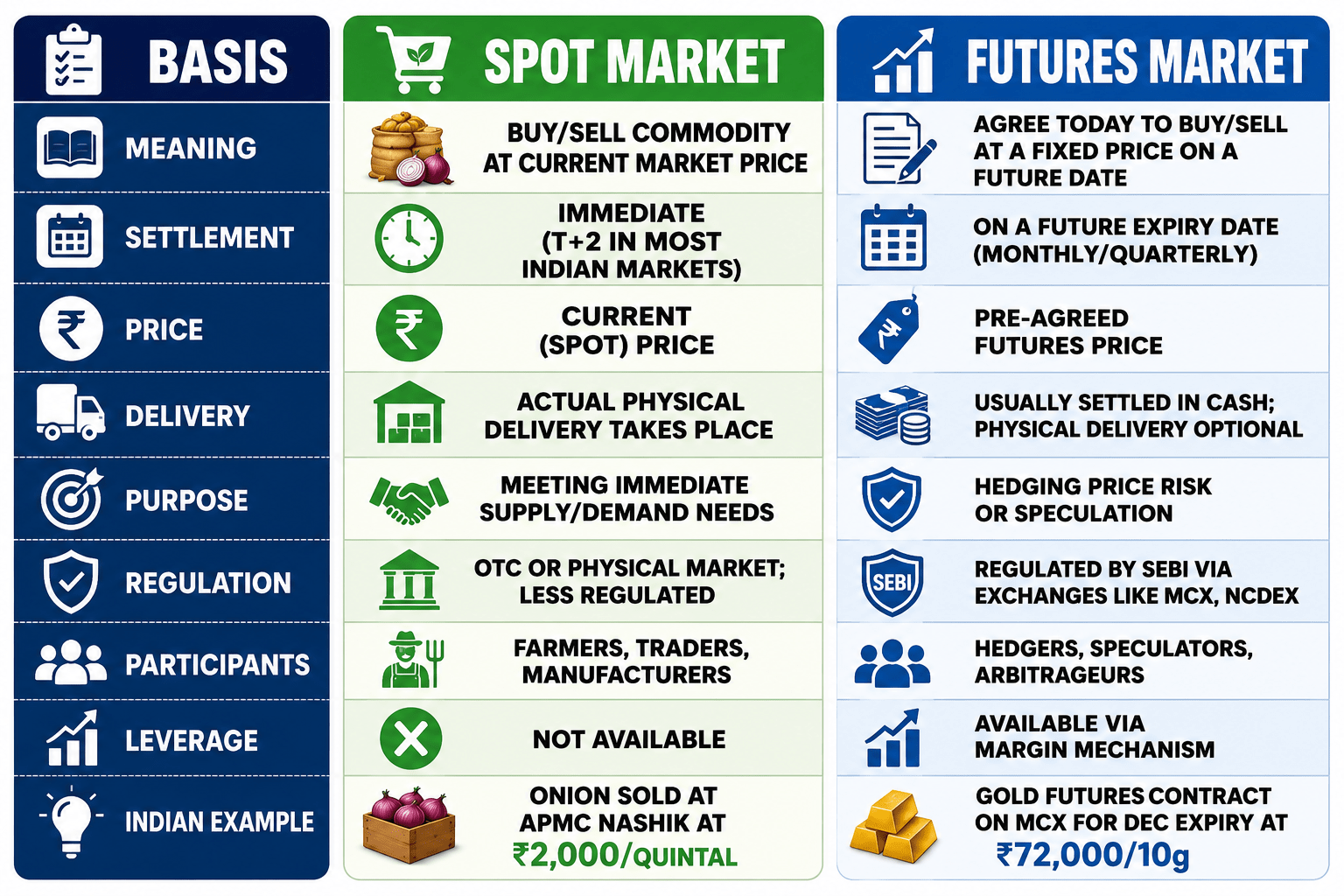
The spot market is the financial market where commodities, securities, or currencies are traded for immediate delivery and payment. Prices in this market are called spot prices, reflecting the current value of the asset.

A jeweller in Mumbai buys 10 kg of gold from a bullion dealer at the current market price of ₹72,000 per 10g.

Key takeaway: The spot market is all about “buy now, pay now, get now.”

Payment & Delivery: Happens immediately.

Purpose: The jeweller needs gold for making ornaments right now

Nature: Transaction is based on the current (spot) price, not a future commitment.

What is a Futures Market?
The futures market involves contracts to buy or sell an asset at a predetermined price on a future date. Here, settlement and delivery happen later
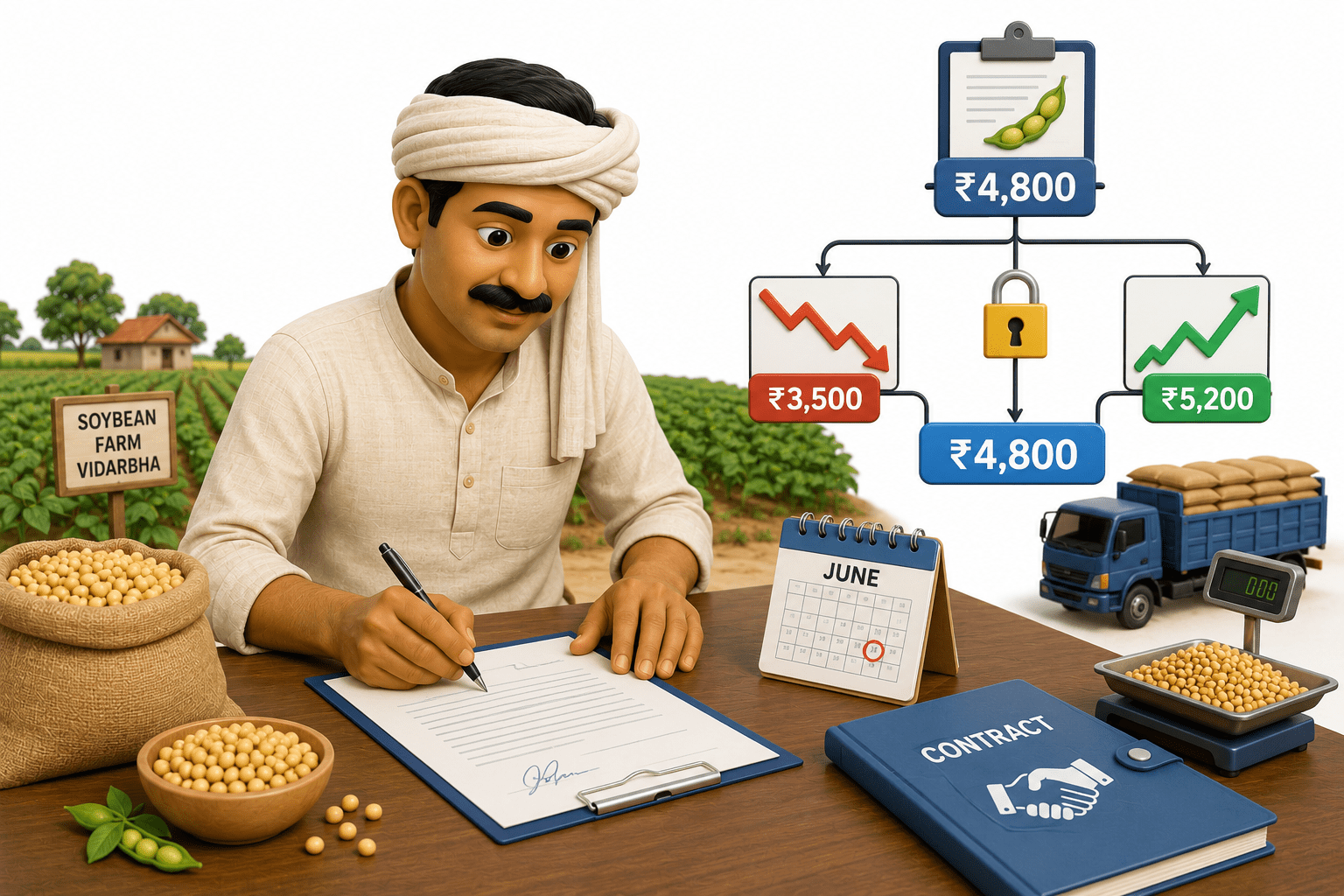
A farmer in Vidarbha grows soybean. He fears prices will fall by October harvest. So in June itself, he signed a contract to sell soyabean at ₹4,800/quintal in October — locking in that price.
Whether the market falls to ₹3,500 or rises to ₹5,200 in October, he sells at ₹4,800. This is a Futures contract.
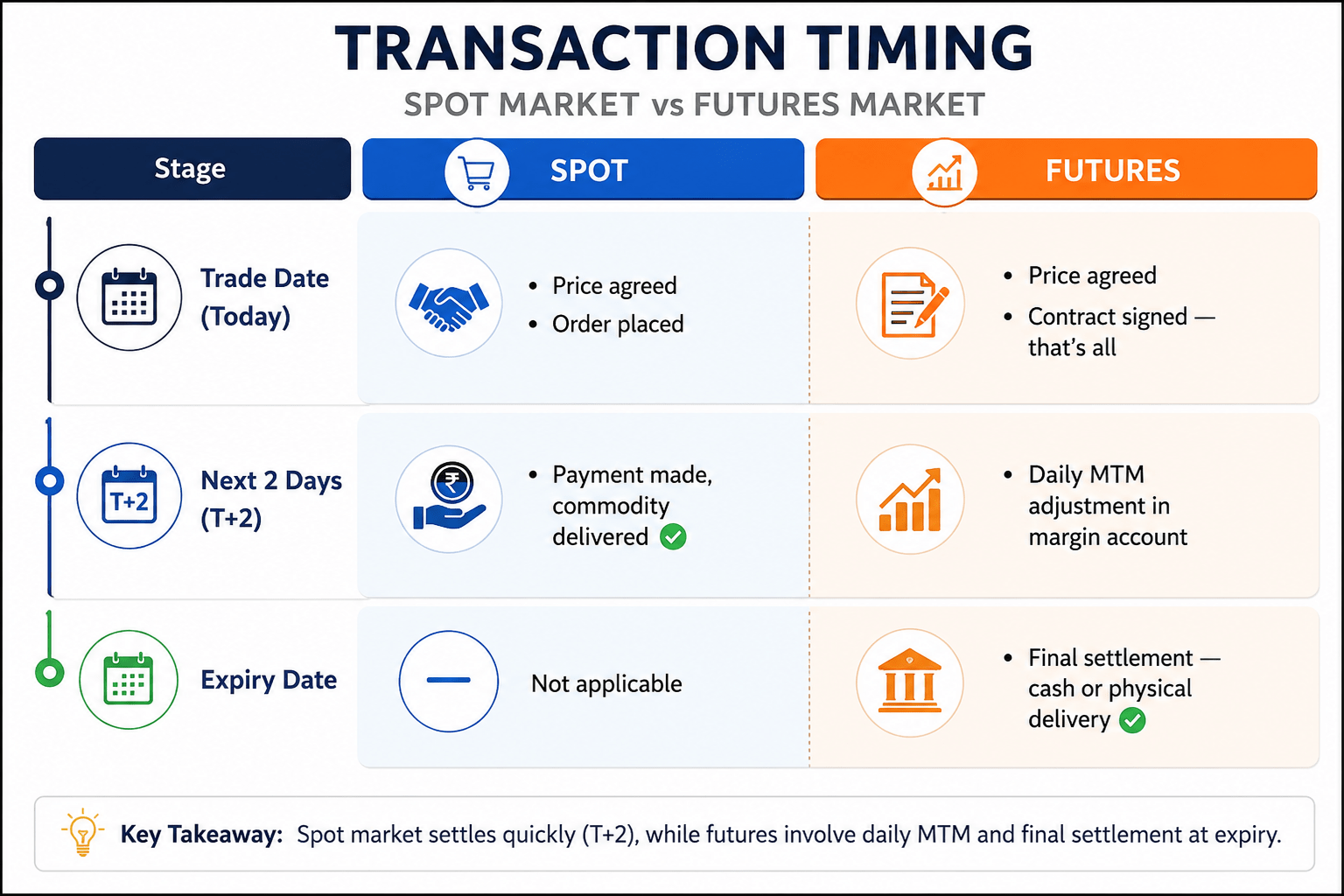
One-line memory trick:
SPOT = exchange NOW.
FUTURES = agree NOW, exchange LATER
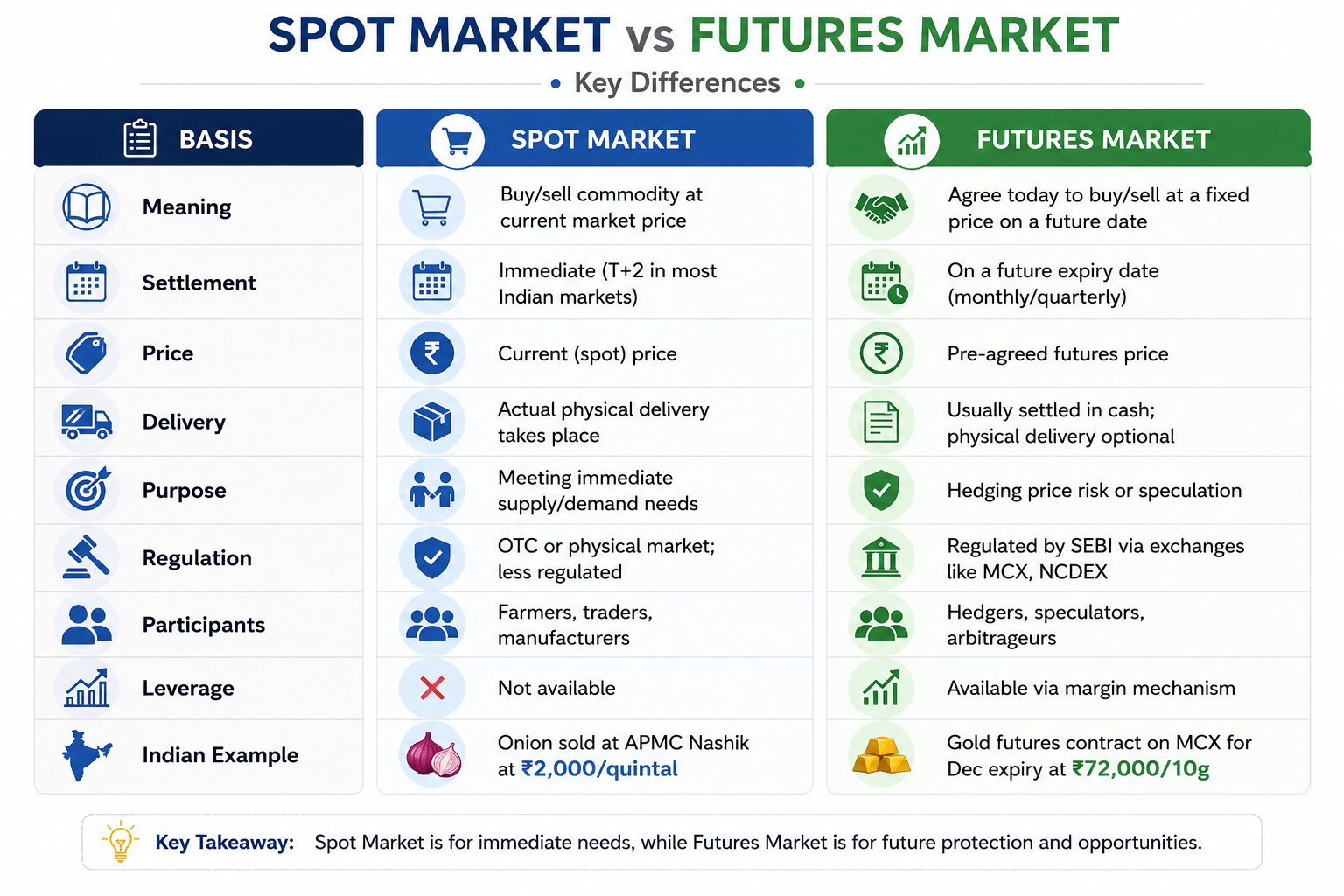
Summary
5
Both markets help manage price risk.
4
Futures contracts are mainly used for hedging risk and speculation
3
Spot transactions are based on current market prices
2
Futures Market involves buying or selling at a fixed future price.
1
Spot Market involves immediate payment and delivery of assets
Quiz
Which market allows margin-based trading
A. Spot Market
B. Futures Market
C. Savings Account
D. Bond Market

Quiz-Answer
Which market allows margin-based trading
A. Spot Market
B. Futures Market
C. Savings Account
D. Bond Market
