Automation & Push Channels


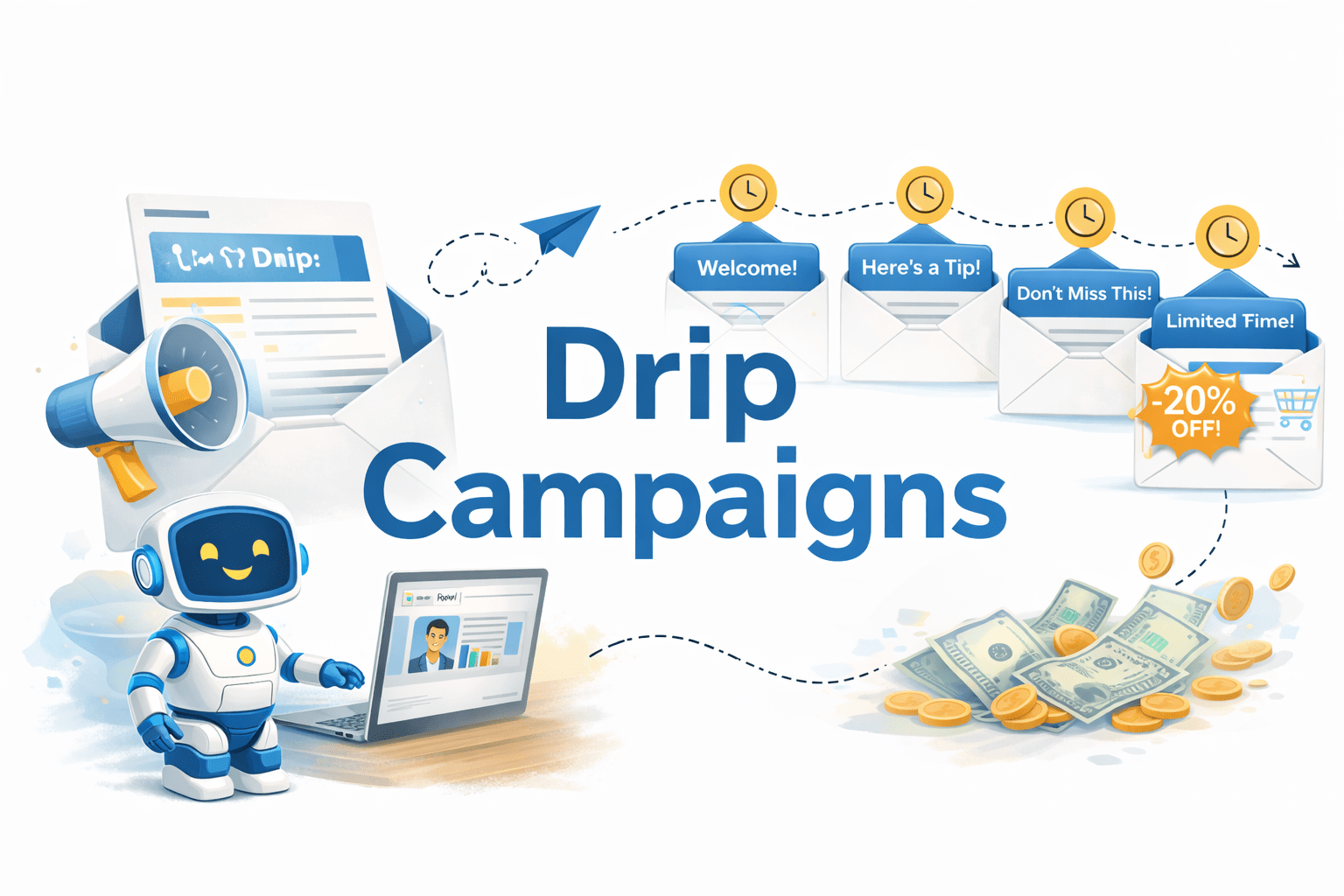
Drip Campaigns

Learning Outcome
6
Apply drip campaigns in real scenarios
5
Create basic drip campaign flow
4
Map drip campaigns to user journey
3
Differentiate drip campaigns from regular emails
2
Identify how drip campaigns work
1
Understand what a Drip Campaign is
Coaching class Story

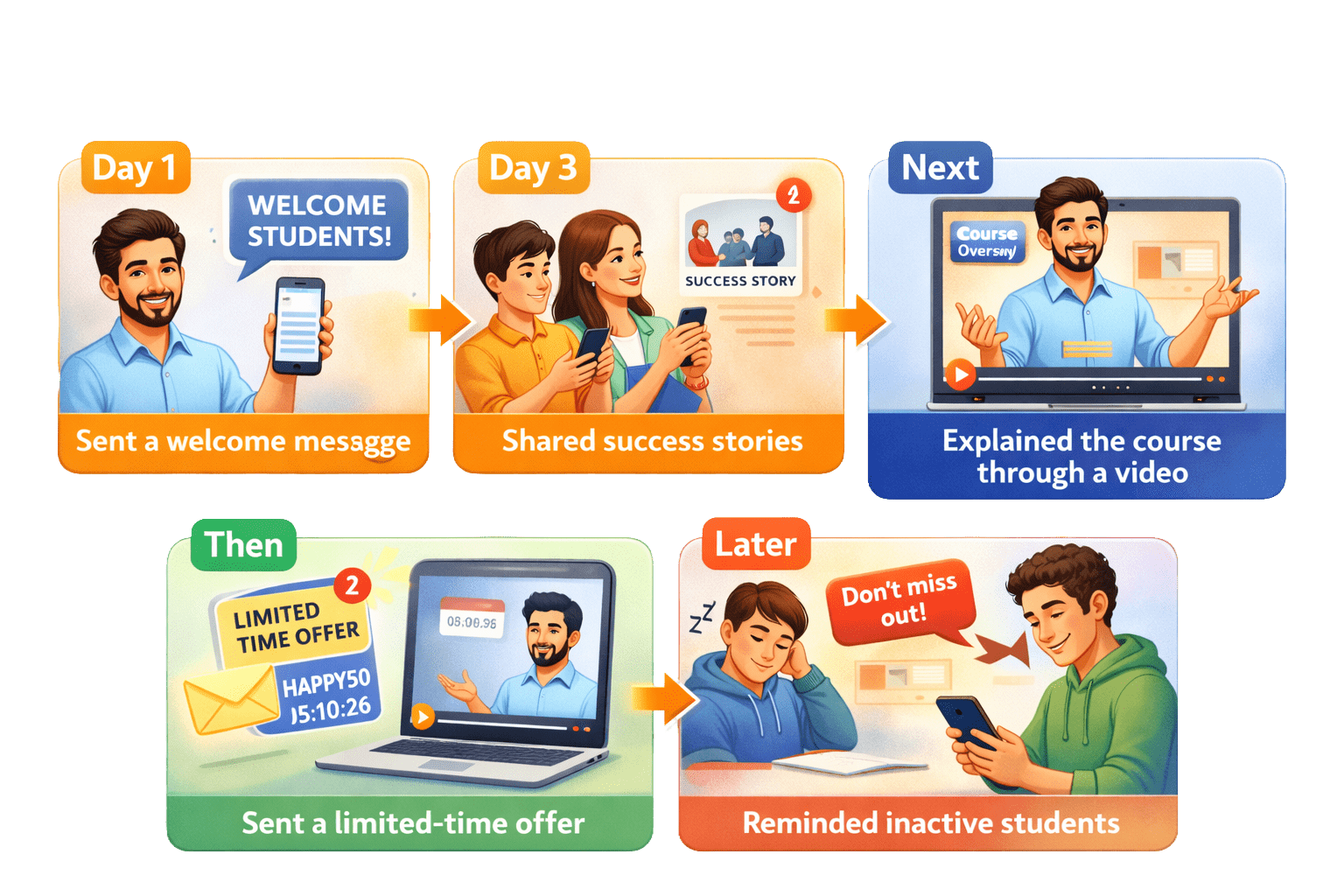
Rahul started a coaching class and received many student inquiries.
Instead of sharing everything at once, he followed a step-by-step approach.
Coaching class Story
Coaching class Story


Over time, students understood better and many joined.
Rahul didn’t rush—he guided them gradually.

Coaching class to drip campaigns
Similarly, in Marketing, this is how drip campaigns work.
Instead of sending everything at once, businesses send planned messages over time or based on actions.
Each message builds trust and interest step-by-step, guiding users toward conversion.
What is a Drip Campaign?
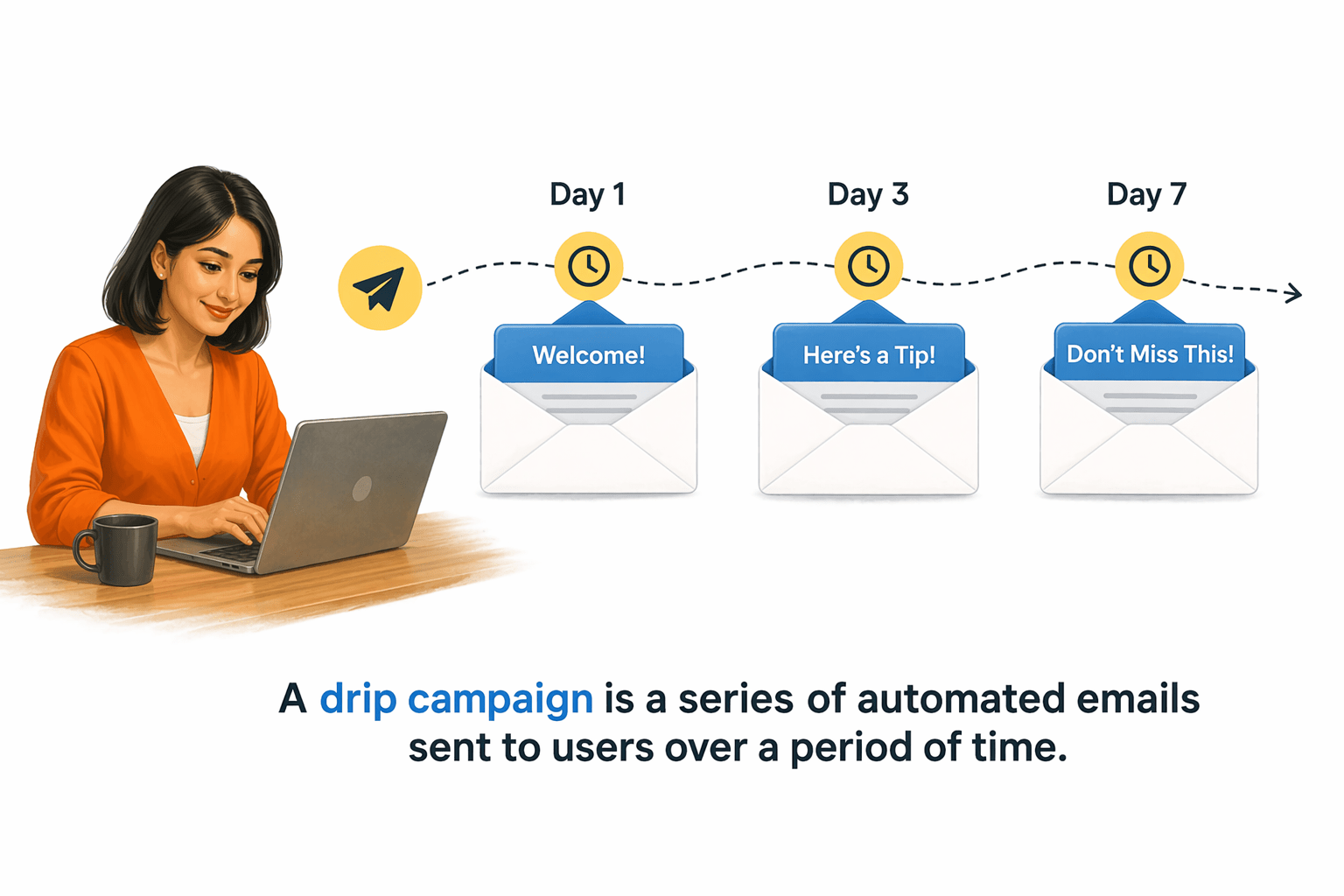
A drip campaign is a series of automated emails sent over time or based on user actions.
Its goal is to deliver information step-by-step, helping in lead nurturing and conversions.
How Drip Campaign Works
User signs up (trigger)
1
First email is sent
2
Follow-up emails are sent after delays
3
Process continues until conversion (e.g., purchase)
4
Example of Drip Campaign
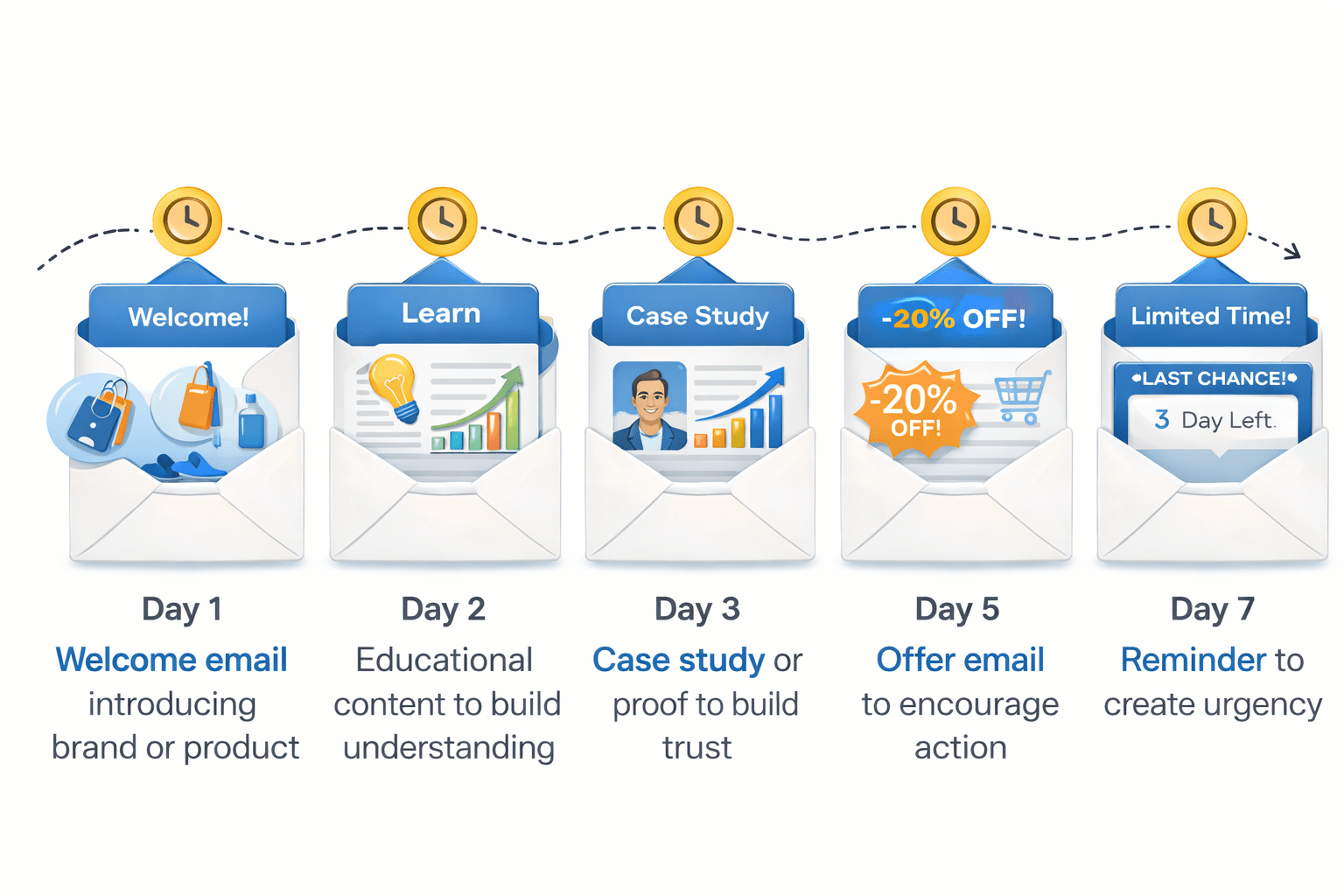
A typical drip campaign may look like this:
This sequence helps guide the user from awareness to decision.
Best Practices & Common Mistakes
Best Practices
- Maintain consistent timing
- Provide value before selling
- Personalize emails
- Add clear call-to-action
- Test and optimize
Common Mistakes
- Sending too many emails
- Poor timing
- Only focusing on sales
- Ignoring user behavior
- Low-quality content
Summary
5
Poor strategy can reduce engagement
4
Success depends on timing, value, and personalization
3
Used to nurture leads toward conversion
2
Triggered by actions or set delays
1
Automated email sequence sent over time
Quiz
Which type of content is used in a drip campaign?
A. Only sales emails
B. Only newsletters
C. Step-by-step emails (welcome, value, offer)
D. Only promotional ads

Quiz-Answer
Which type of content is used in a drip campaign?
A. Only sales emails
B. Only newsletters
C. Step-by-step emails (welcome, value, offer)
D. Only promotional ads

Quiz-Answer
Which platform is mainly used for professional networking and B2B marketing ?
A. Facebook
B. Instagram
C. LinkedIn
D. Snapchat